

Affiliate disclosure: This post contains affiliate links. If you buy through them, I may earn a small commission — at no extra cost to you. I only recommend products I'd point a friend to, and my editorial opinions are my own. Full disclosure here.
Relactation — rebuilding a milk supply after it has slowed or stopped — is one of the few breastfeeding goals where the machine genuinely matters. Not because a pump can manufacture milk (no pump can), but because relactation is driven almost entirely by frequency of stimulation, and the right pump is the one that makes pumping eight to twelve times a day actually livable. As a former cosmetic chemist, I'm wired to read the spec sheet rather than the launch reel, so this guide answers the practical question behind "what's the best breast pump for relactation" — what your pump setup has to do, what to ignore, and which two Momcozy wearables fit the job — without pretending a gadget replaces the technique or your own care team.
Two honest framings up front. First, this is a gear-and-technique guide, not medical advice: if you're relactating after a NICU stay, an adoption, or a supply that dropped off, loop in an IBCLC lactation consultant or your doctor — they'll personalize the plan in a way no article can. Second, I didn't run a controlled output trial; every price and spec below comes from Momcozy's current US product pages, with manufacturer figures flagged as "Momcozy-stated," and each pick carries my editorial "Our score" — an opinion, not a customer average.
Key Takeaways
- Frequency beats suction: relactation is rebuilt by stimulating often — many short sessions a day — far more than by the headline mmHg number on the box.
- Why a wearable wins here: a cord-free, in-bra pump like a Momcozy V1 Pro or M5 Smart lets you fit those extra sessions around real life, which is the whole battle.
- "Hospital-grade" is marketing, not a certificate: Momcozy uses it to signal strong, efficient suction — it is not a formal regulatory rating, and you usually don't need a true rental hospital-grade pump for relactation unless your care team advises one.
- The lever you control: get your flange size right, pump on a consistent schedule, and consider power pumping to mimic cluster feeding — that's where the supply actually comes from.
What relactation actually asks of a pump
Milk production runs on supply and demand: the breast makes more when it's emptied often and signaled often. Relactation simply turns that dial back up after the demand signal has faded — which means a lot of short, frequent stimulation sessions through the day and (ideally) one or two overnight, since prolactin, the hormone that drives milk-making, tends to run higher at night. Set the exact schedule with a lactation consultant, but the shape is always the same: often matters more than hard.
That reframes what you want from a pump. You're not shopping for the biggest suction figure — you're shopping for the pump you'll actually reach for at 2 p.m. on a workday and again at 11 p.m. on the couch. Three traits make a pump "reachable" that often: it's cord- and tube-free (no base, outlet or sitting still — so you use it more times a day); it has a true letdown/stimulation phase (a fast, light rhythm to trigger letdown, then a slower expression rhythm — reliable letdown is what makes each short session productive); and it offers suction you can dial to comfortable (more levels let you start gentle, because pain doesn't speed relactation, it sabotages it by making you skip sessions). For the full primer on pump types and flange sizing, see our breast pump buying guide — the short version for relactation is that a quality wearable hits the convenience-plus-rhythm sweet spot better than a tethered pump you have to schedule your life around.
"Hospital-grade" — what it does and doesn't mean
You'll see "hospital-grade" attached to relactation advice constantly, so let's be precise. It is a marketing term, not a certification: there's no formal regulatory body that stamps a pump "hospital-grade." In practice it signals a pump built for strong, efficient, frequent use — the kind hospitals rent to parents establishing supply from zero. A genuine multi-user rental pump can help in the hardest cases (a premature baby, no established supply), and your care team may specifically recommend renting one.
But for many relactation journeys, a strong personal wearable used frequently does the job, and it does it where you live rather than where you can plug in. Momcozy markets its V1 Pro as "hospital-grade," and I want to be transparent that the phrase is a strength claim, not a clinical rating — the V1 Pro is a single-user consumer wearable. What's verifiable is its stated suction (-300 mmHg, the strongest in Momcozy's line) and its level range. If your situation truly calls for a certified rental unit, your hospital or IBCLC is the right source; for most parents rebuilding supply at home, the picks below are the practical, ownable option. (More on what the label means in what counts as a hospital-grade breast pump.)
The two Momcozy pumps I'd choose for relactation
Both of these are wearables, because for a job defined by frequency, the pump you can use anywhere is the pump that gets used. I've ranked the V1 Pro first for relactation specifically — its strongest-in-line stated suction and level range suit frequent stimulation — and the M5 second for parents who want the data to see progress. Both are $199.99 at list, so the choice is about fit for the task, not price.
1. Momcozy V1 Pro — strongest suction for frequent stimulation

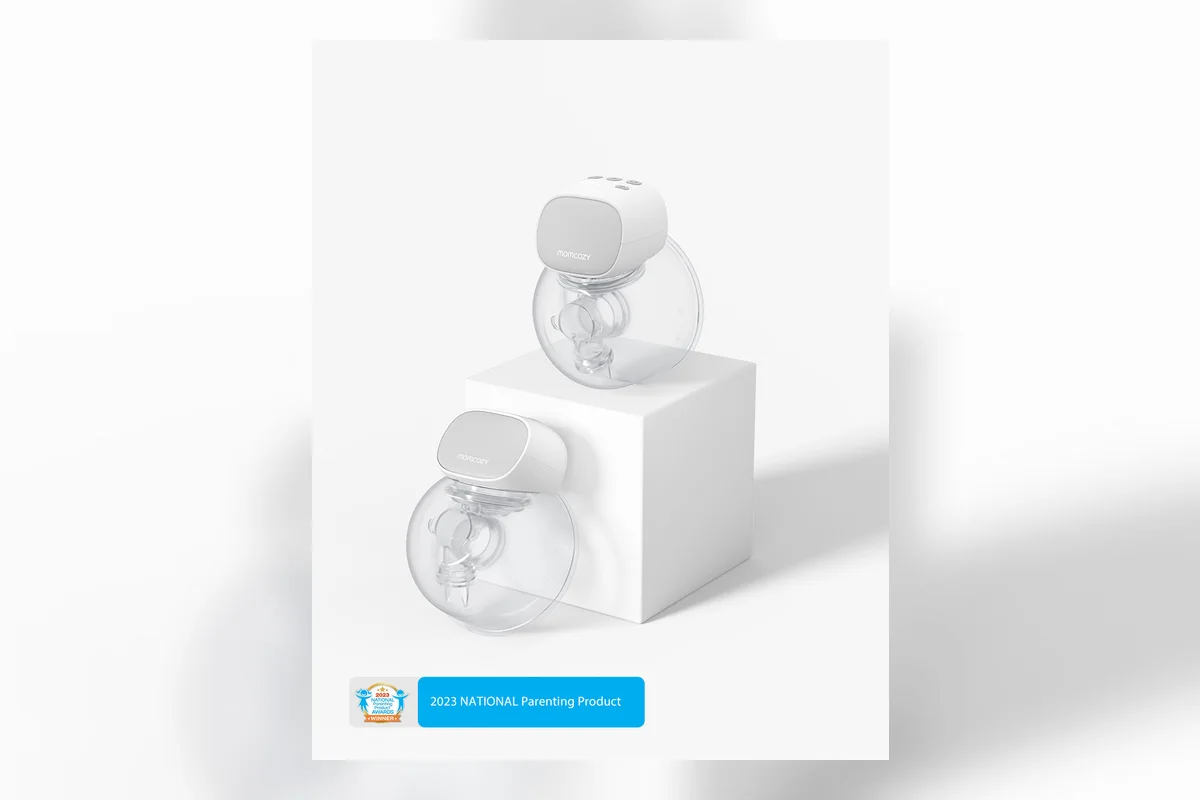
Momcozy V1 Pro Wearable Breast Pump
Momcozy's strongest stated suction (-300 mmHg) with 15 levels and 3 rhythms, in a cord-free in-bra body built for back-to-back sessions. No app, and "hospital-grade" is marketing — but the best fit for relactation's frequent stimulation.
Check price at Momcozy →For relactation, the V1 Pro is the Momcozy I'd reach for first, for one reason that maps directly onto the job: it has the most range. Momcozy states its maximum suction at -300 mmHg — the strongest in the line — across 15 levels, with 3 rhythms covering stimulation through expression. That matters less because you'll crank it to the top (you shouldn't — comfort first) and more because more levels let you start gentle and ramp precisely, and a dedicated stimulation rhythm helps trigger letdown so each of your many short sessions is productive. It's a fully cord- and tube-free in-bra wearable, so you can run a session while you make lunch, answer email, or sit with the baby — exactly the friction-free convenience that makes 8–12 sessions a day survivable. At $199.99 it's mid-pack on price for what it does.
- Pros: strongest Momcozy-stated suction (-300 mmHg) and the widest range here (15 levels, 3 rhythms); a true stimulation phase for reliable letdown; cord- and tube-free for frequent go-anywhere sessions; $199.99.
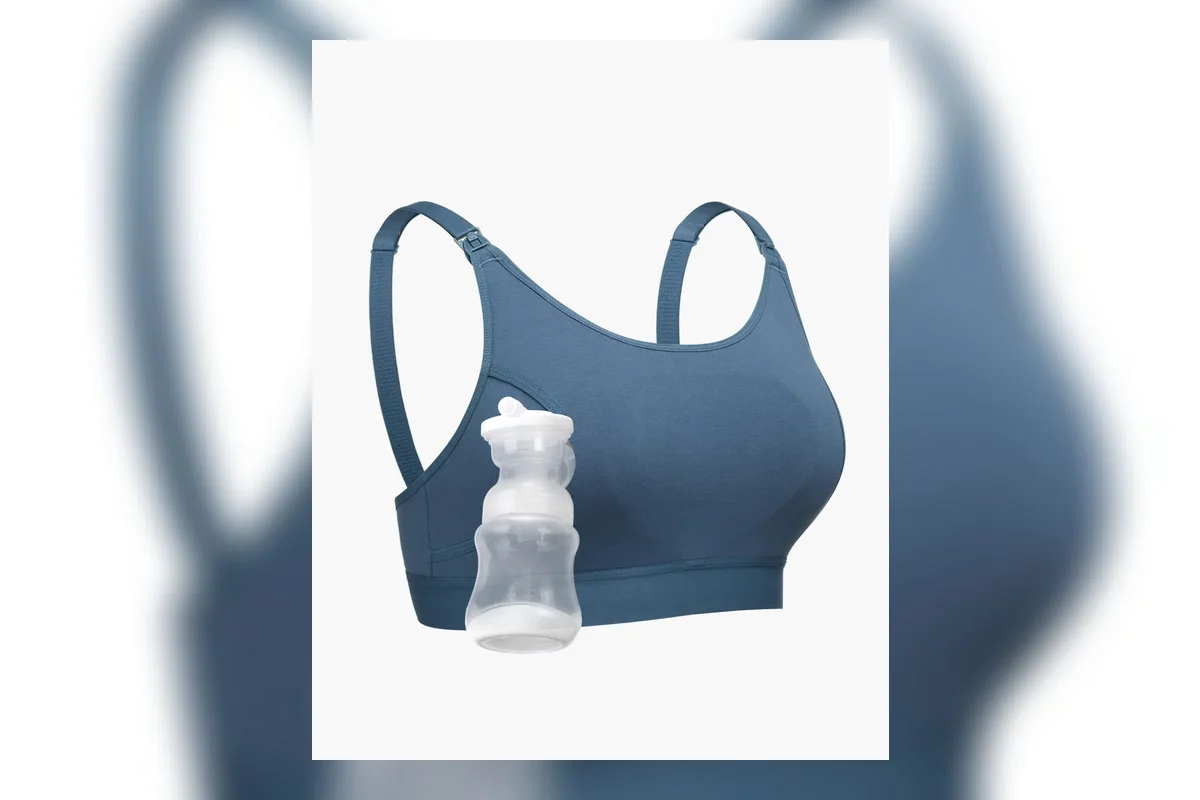
- Cons: no app or output tracking (the M5's edge); "hospital-grade" is a marketing label, not a certification, so don't read it as a clinical rating; like any in-bra cup pump it's position-sensitive — a loose cup breaks the seal and drops output, so a snug pumping bra is worth it.
2. Momcozy M5 Smart — best for tracking your progress

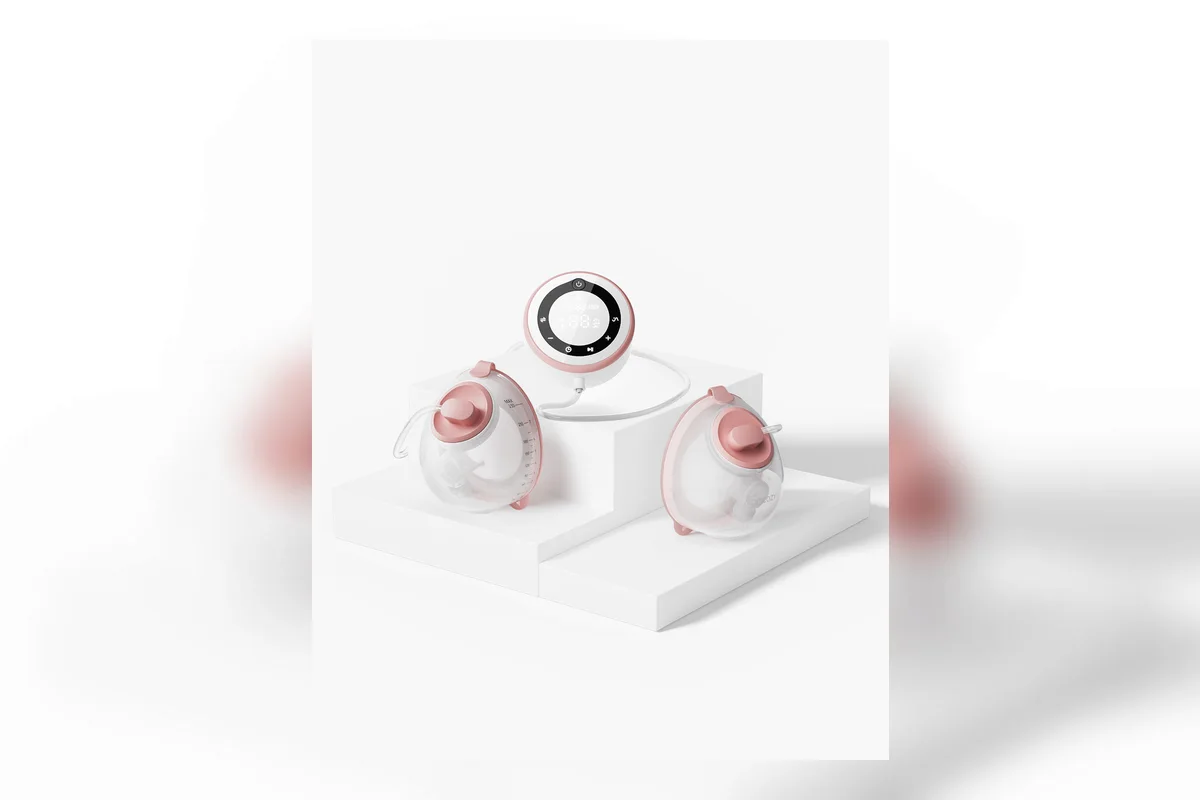
Momcozy M5 Smart Wearable Breast Pump
The only Momcozy here with real app control and milk tracking, in a light 8 oz in-bra body with a DoubleFit flange. Moderate 285 mmHg suction (Momcozy-stated), but the data is genuinely useful on a frequent relactation schedule.
Check price at Momcozy →The M5 Smart takes second for relactation on one genuine advantage: it's the only Momcozy in this pair with real app control and milk tracking. When your whole plan hinges on hitting a high session count and watching output trend up over weeks, being able to log every session and actually see the trend — by day, week or month — is more than a gimmick; it keeps you honest about frequency and shows progress that's easy to lose faith in otherwise. Momcozy lists three modes and nine suction levels, an 8 oz body (light, for fitting in more sessions), a 5.4 oz cup, and the DoubleFit flange for fit, at $199.99. The honest trade-off versus the V1 Pro is power: the M5's stated maximum is 285 mmHg with nine levels rather than fifteen — moderate, not class-leading — so if you want maximum stimulation range, the V1 Pro leads. Choose the M5 if the discipline of tracking would help you more than a few extra mmHg.
- Pros: real app control with milk-output tracking — useful for staying on a frequent schedule and seeing supply trend up; light at 8 oz; DoubleFit flange for fit; nine suction levels to dial in comfort.
- Cons: lower Momcozy-stated suction (285 mmHg) and fewer levels (9) than the V1 Pro; app reliance won't suit everyone; it's also the model owners most often name in reliability complaints — register the warranty, keep your receipt, and see the owner note in our full Momcozy review before you commit.
How to actually rebuild supply (the part the pump can't do)
No pump increases supply on its own — your routine does, and the pump is just the tool that makes the routine sustainable. Frequent emptying and stimulation signal your body to make more, which is why technique matters more than the model.
Pump often, on a real schedule. Aim for the session count your IBCLC sets (commonly eight to twelve a day, including overnight), and treat consistency as the actual product. The U.S. FDA's guidance on choosing and using a breast pump emphasizes correct flange fit and starting at the lowest comfortable suction — chasing the highest setting isn't what builds supply.
Use power pumping to mimic cluster feeding. A focused power-pumping block — short pump-rest-pump bursts within one hour — imitates how a baby cluster-feeds to ramp supply, and it's one of the highest-leverage techniques for relactation. The schedule is in our power pumping guide, and it pairs with the broader tactics in how to increase milk supply while pumping.
Don't over-index on the suction number. Both picks sit at a strong Momcozy-stated 285–300 mmHg, which is plenty; the gap between them won't make or break relactation. What will: hitting your sessions, triggering letdown each time, and a flange that fits. To compare these wearables against premium closed-system pumps like Elvie and Willow, that's what our best wearable breast pumps roundup is for.
Frequently asked questions
The best relactation pump is the one you'll use frequently, because relactation is driven by how often you stimulate and empty the breast — not by the highest suction number. A cord-free wearable wins on that count: among Momcozy's pumps I'd choose the V1 Pro first for its strongest stated suction (-300 mmHg) and 15 levels, and the M5 Smart second for its app-based output tracking. Both are $199.99. Pair either with frequent, scheduled sessions and a power-pumping block, ideally guided by a lactation consultant.
Often no. "Hospital-grade" is a marketing term, not a formal certification — it signals strong, efficient suction rather than a regulatory rating. A true multi-user rental pump can help in the hardest cases, such as establishing supply from zero for a premature baby, and your care team may recommend renting one. For many parents rebuilding supply at home, a strong personal wearable used frequently does the job and goes wherever you are. Ask your IBCLC or hospital if your situation specifically calls for a rental unit.
Frequency is the engine of relactation: parents are commonly guided to pump roughly eight to twelve times a day, including at least one overnight session, because prolactin (the milk-making hormone) tends to run higher at night. Short, frequent sessions that reliably trigger letdown beat fewer, longer, or harder ones. Your exact schedule should be set with a lactation consultant, who can tailor it to whether you're relactating after a gap, an adoption, or a NICU stay.
Not on its own. Supply responds to frequency of stimulation and emptying, so the number of comfortable, effective sessions matters far more than the maximum mmHg. Both Momcozy picks here sit at a strong stated 285–300 mmHg, which is ample; more suction than is comfortable actually backfires by causing pain that makes you skip sessions. Start at the lowest comfortable level, make sure your flange fits, and ramp only as far as stays comfortable.
For relactation specifically I'd take the V1 Pro for its stronger Momcozy-stated suction (-300 mmHg) and wider range (15 levels, 3 rhythms), which suit the frequent stimulation relactation depends on. The M5 Smart, at the same $199.99 list price, trades a little power (285 mmHg, 9 levels) for genuine app control and milk-output tracking — valuable if seeing your supply trend up week over week keeps you on schedule. Choose the V1 Pro for range, the M5 for data.
Yes — power pumping is one of the more useful techniques for relactation because it imitates how a baby cluster-feeds to ramp supply: a concentrated hour of short pump-and-rest intervals signals demand more intensely than a single steady session. It works best layered onto an already frequent schedule rather than as a substitute for it. See our power pumping guide for the interval timing, and treat it as one tool alongside consistent daily sessions and guidance from your lactation consultant.