

Affiliate disclosure: This post contains affiliate links. If you buy through them, I may earn a small commission — at no extra cost to you. I only recommend products I'd point a friend to, and my editorial opinions are my own. Full disclosure here.
I'm a former cosmetic chemist, so I came at power pumping the way I'd read any protocol: what is the actual mechanism, and which of the claims around it hold up? The short version is that power pumping is a deliberately stop-and-start session — short bursts of pumping with short rests, packed into about an hour — designed to imitate the frequent, irregular nursing of a baby in a growth spurt. It works on supply through one honest lever: demand. Milk production runs on frequent, thorough removal, so a session that empties and re-empties the breast in quick succession sends a stronger "make more" signal than one long pull. This guide is the part nobody explains well: the exact schedule, what to realistically expect, and the pump setup that makes 60 minutes of on-off cycling something you'll actually keep doing.
One thing up front, because integrity matters here more than anywhere: I'm not a lactation consultant, and nothing below is medical advice. Power pumping is a technique, not a medication — it doesn't "boost supply" on command, and it won't fix a supply problem with a structural cause (latch, thyroid, retained placenta, insufficient glandular tissue). If supply is a genuine worry, a lactation consultant or your provider is the right first call. What I can do well is the gear-and-method side.
Key Takeaways
- What it is: one ~60-minute session of pump-rest-pump-rest cycles, done once a day, that mimics a baby cluster-feeding to signal more demand.
- The schedule: the common pattern is pump 20 / rest 10 / pump 10 / rest 10 / pump 10. Run it once daily, ideally in the morning when supply tends to be highest.
- The lever is frequency, not suction. Power pumping works by emptying often, not by pulling harder — so chasing the biggest mmHg number is the wrong instinct. Get a comfortable, complete drain.
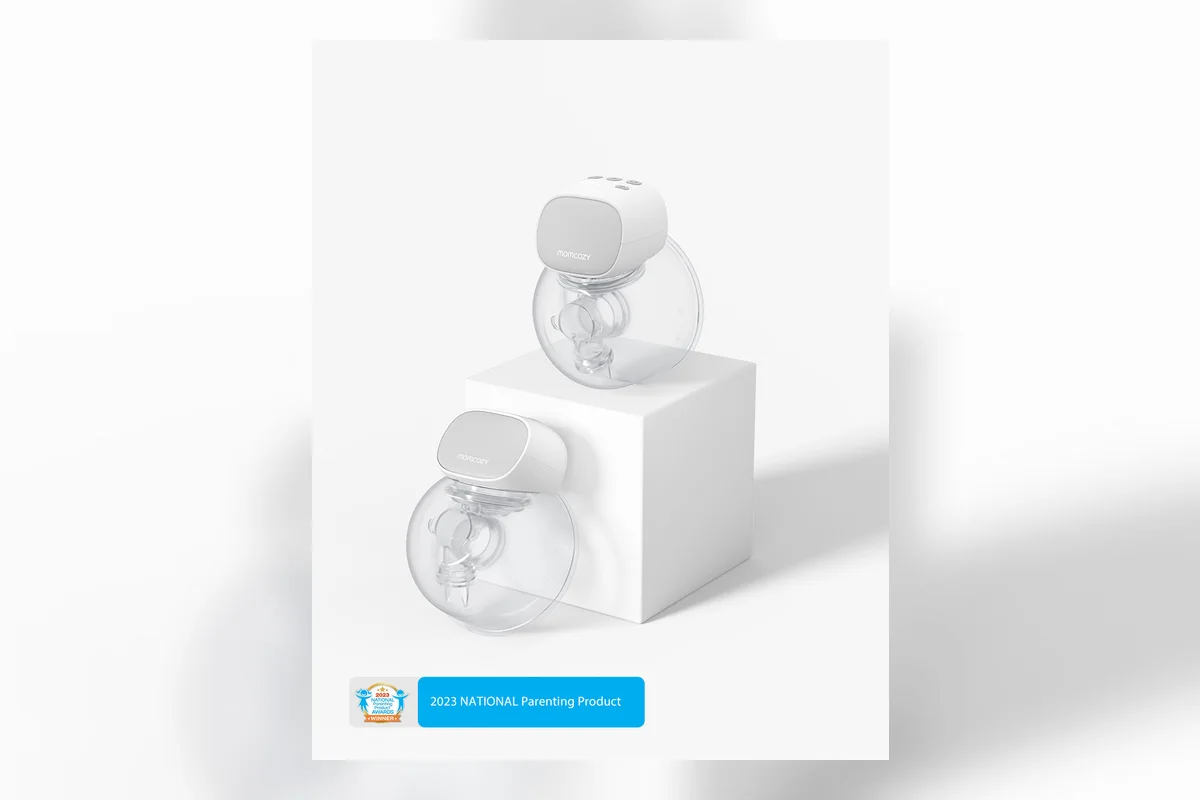
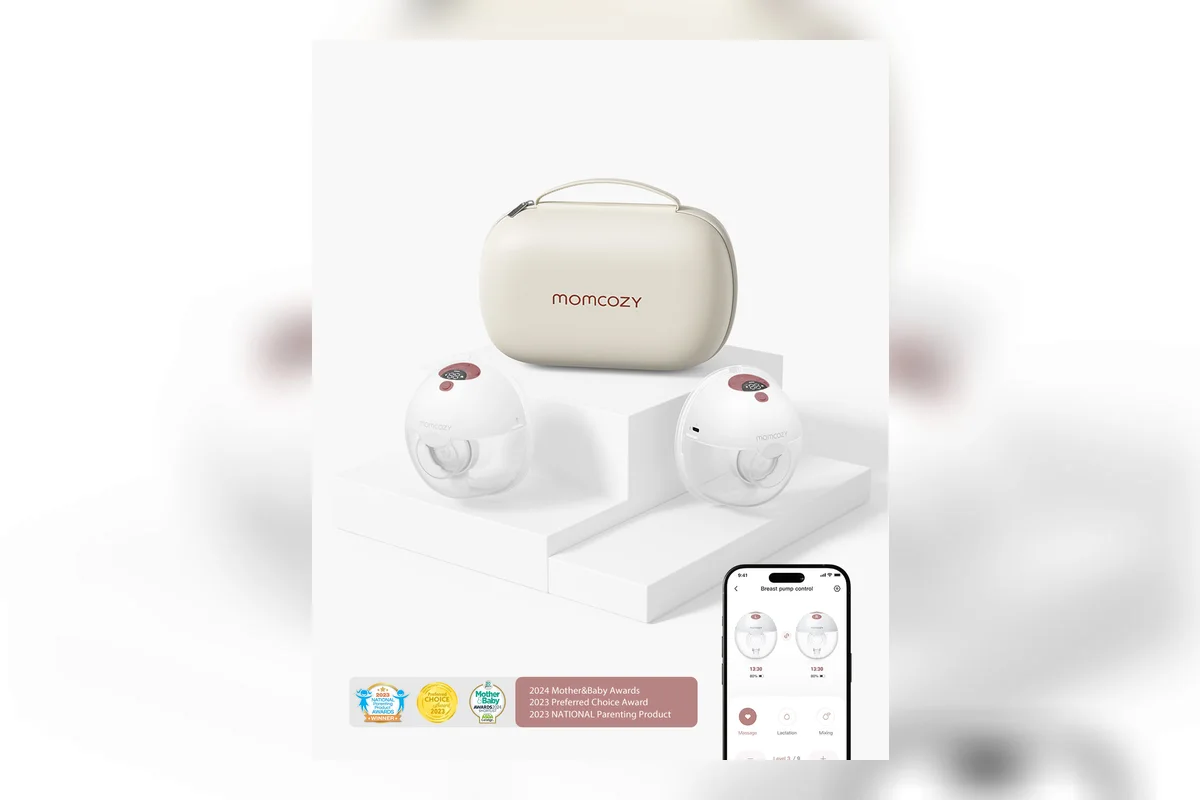
- Why a wearable wins here: 60 minutes tethered to a wall pump is brutal; a hands-free in-bra pump lets you run cycles while you live your life. My picks below are Momcozy's V1 Pro (strongest pull), M5 (app times the cycles for you), and S12 Pro (best value).
- Give it ~3–7 days. A response, if it comes, usually takes several consistent days — not a single session. Stay realistic, and pair it with frequent regular removals (the full picture is in how to increase milk supply while pumping).
What power pumping actually is (and isn't)
Your body makes milk on a supply-and-demand loop: the emptier and the more often the breast is drained, the more strongly it's told to produce. A newborn in a growth spurt exploits this on purpose — they cluster-feed, nursing in rapid, short, repeated bouts for an hour or two, which is effectively them placing a bulk order for more milk. Power pumping is the pump version of that cluster-feed. Instead of one steady 15–20 minute pump, you break an hour into alternating short pumps and short rests, so the breast gets repeatedly stimulated and drained the way it would during a real cluster-feed.
What it is not is a stronger or longer pump. People hear "power" and assume it means cranking the suction to the top or pumping for two hours straight — both wrong, and the second one risks sore, damaged tissue. The "power" is in the cadence: frequent removal in a compressed window. It also isn't a daily forever-habit; it's a short-term nudge you run for several days to a couple of weeks when you want to lift supply, then taper off. And it is genuinely demanding on your time and your nipples, which is exactly why the setup matters so much.
The power pumping schedule, step by step
There's no single official protocol — it's a folk technique that's been refined by pumping parents, not a clinical regimen — but the patterns converge on the same shape: roughly an hour, mostly pumping, with short rests, done once a day. The most-shared version:
| Minutes | What you do |
|---|---|
| 0–20 | Pump (both sides) |
| 20–30 | Rest — pump off |
| 30–40 | Pump |
| 40–50 | Rest — pump off |
| 50–60 | Pump |
A simple, widely used pattern: pump 20 / rest 10 / pump 10 / rest 10 / pump 10. Adjust the blocks to your comfort — some prefer pump 10 / rest 10 repeated five or six times. The principle (frequent removal in ~1 hour) matters more than the exact minutes.
A few rules that make it work without making it miserable:
- Once a day is plenty. Power pumping is meant to replace one of your regular pump sessions, not be added on top of every one — otherwise you'll burn out fast. Pick the slot you can protect.
- Morning is the sweet spot. Prolactin and milk volume tend to run highest in the early morning, so a power-pump session shortly after you wake often yields the most for the same effort.
- During the "rest" minutes, leave the pump off but the cups on. The rests are part of the stimulus — the rapid empty-pause-empty rhythm is the whole point. Use the breaks to drink water, hold the baby, or just breathe.
- Don't crank the suction to chase the rests. Run a setting that's strong but comfortable. Pain doesn't make more milk; it makes you quit. (More on why below.)
- Keep your normal pumps going around it. Power pumping is a supplement to frequent regular removal, not a replacement for it. The day's total number of drains is still what drives supply.
For the broader supply playbook power pumping fits inside — session frequency, full drainage, fixing the boring fundamentals first — see how to increase milk supply while pumping. And if you're rebuilding supply after a gap rather than topping it up, breast pumps for relactation covers the longer, more frequent schedule that situation calls for.
Why your pump choice makes or breaks it
Here's the practical truth that gear reviews skip: the single biggest reason people quit power pumping is the chair. A traditional, plug-in or even portable handheld pump tethers you by tubes to a motor for a full hour, sitting still, twice the time of a normal session. Do that once and you'll dread the next. This is the one job a hands-free, in-bra wearable is genuinely built for: you slip the cups into your bra, start the cycle, and go make breakfast, answer email, or settle the baby through the rests. The whole hour stops being dead time. That's why every pump I recommend below is a wearable — for power pumping specifically, freedom of movement isn't a luxury, it's what determines whether you'll actually finish the session.
What to look for in a power-pumping wearable: a comfortable, repeatable letdown rhythm (a dedicated stimulation/massage mode, because each cycle starts with a fresh letdown); a battery that survives a full 60-minute block with the motor cycling on and off; simple cleanup, because you'll be doing this daily; and good flange fit, which matters more than any suction figure for both comfort and drainage. The three Momcozy wearables below cover those bases at three price points. I've ordered them by how well each fits the power-pumping job specifically — not by price.
1. Momcozy V1 Pro — strongest pull for a fast letdown

Momcozy V1 Pro Wearable Breast Pump
Momcozy's strongest wearable at a stated -300 mmHg, with 3 rhythms and 15 fine levels — handy for dialing in a firm, comfortable letdown each cycle. No app, but the most pull in the line.
Check price at Momcozy →For repeated quick letdowns through an hour of cycling, the V1 Pro is the Momcozy I'd reach for. It tops the brand's line at a Momcozy-stated -300 mmHg, with three rhythms and fifteen suction levels — that fine-grained ladder is genuinely useful here, because you want to find the highest setting that's still comfortable and sit there, not max it out. One honest correction on the marketing: Momcozy calls it "hospital-grade," but that's a marketing phrase, not a certification — in this category it signals strong, efficient suction, nothing more. The other trade-off is that the V1 Pro has no app, so you'll run the on/off schedule on a phone timer yourself. If you want the schedule automated, the M5 below is the better fit; if you just want the firmest, fastest letdown in a wearable and don't mind a kitchen timer, this is it.
- Pros: strongest suction in the Momcozy line (Momcozy-stated -300 mmHg); 15 levels for precise comfort tuning; 3 rhythms including a stimulation phase; fully in-bra and hands-free.
- Cons: no app, so you time the cycles manually; "hospital-grade" is marketing, not a rating; like all in-bra cup pumps it's position-sensitive — a tilted cup breaks the seal and output drops, so a snug pumping bra helps.
2. Momcozy M5 Smart — lets the app run your cycles

Momcozy M5 Smart Wearable Breast Pump
The only Momcozy here with real app control and milk tracking: it logs each cycle and switches stimulation/expression modes for you, so a fiddly power-pump schedule runs itself. Moderate 285 mmHg suction (Momcozy-stated).
Check price at Momcozy →The M5 Smart earns its spot for one reason that matters disproportionately when you're cycling on and off for an hour: it's the only Momcozy here with genuine app control. Momcozy lists three modes (stimulation, expression, mixed) and nine levels, and the app adjusts modes and levels, tracks output, and shows your pumping stats by day, week or month. In practice that means you can watch which sessions actually drain better, and the mode-switching takes some of the manual fiddling out of the schedule. It's light at 8 oz, holds 5.4 oz per cup, uses the DoubleFit flange, and Momcozy states roughly 180 minutes of battery — plenty for a 60-minute power-pump block. The honest nuance is power: at a Momcozy-stated 285 mmHg, its suction is moderate and lower than the V1 Pro, so it's not the pick if you want the firmest possible pull. But for power pumping, where the cadence is the lever and tracking helps you stay consistent, the M5 is the most useful all-rounder. (It's the same model I rate as Momcozy's best overall in my full Momcozy breast pump review.)
- Pros: real app control and milk tracking — turns the schedule into something the app helps run; light (8 oz); DoubleFit flange for fit; ~180 min battery (Momcozy-stated) easily covers an hour.
- Cons: moderate 285 mmHg suction (lower than the V1 Pro); app reliance won't suit everyone; in owner reviews the M5 is the model named most often in reliability complaints — see the owner note below.
3. Momcozy S12 Pro Quick — best value for daily cycling

Momcozy S12 Pro Quick Wearable Breast Pump
Momcozy-stated -292 mmHg, a quick 4-part cleanup and a battery good for ~8 sessions, so a full power-pump block won't drain it. No app, but the cheapest credible wearable for the job.
Check price at Momcozy →If you're going to power pump daily for a couple of weeks and don't want to spend $200 on a short-term push, the S12 Pro Quick is the sensible value pick. Momcozy lists -292 mmHg — within a hair of the M5's headline figure — plus a streamlined 4-part design (fewer pieces to wash matters when you're cleaning daily) and the DoubleFit hybrid flange. Its 1350 mAh battery is rated for roughly eight sessions, so a single 60-minute power-pump block won't leave you scrambling for a charger mid-cycle, and at under 46 dB it's quiet enough to run while the baby naps nearby. It sits at #3 only because of what it omits: no app, so you'll run the schedule on a timer, and a more basic feature set than the M5. But the core wearable job — strong, comfortable, hands-free, repeatable cycling — it does for the least money. For a power-pumping run on a budget, it's the Momcozy I'd hand most people.
- Pros: lowest price of these three ($139.99); Momcozy-stated -292 mmHg; quick 4-part cleanup for daily use; battery good for ~8 sessions; quiet (<46 dB).
- Cons: no app or tracking, so you time the cycles yourself; fewer comfort refinements than the M5; best as a value or short-term pump than a feature flagship.
How to get more out of every session
Fit beats suction, every time. The instinct with power pumping is to chase a bigger suction number, but a flange that's the wrong size hurts and underperforms regardless of the motor — and pain is the fastest route to quitting. The U.S. FDA's guidance on choosing a breast pump stresses getting the right breast-shield size and starting at the lowest comfortable setting, not the highest one. Measure your nipple diameter and size your flange to that. The M5 and S12 Pro use Momcozy's DoubleFit flange to help here; if the included sizes don't fit, that's the first thing to fix.
Use a real stimulation phase to trigger each letdown. Every one of your power-pump cycles ideally starts with the fast, light "massage/stimulation" rhythm to provoke a letdown, then switches to the slower, stronger "expression" rhythm to drain. All three pumps here have a stimulation mode; the M5's app makes that switch for you, while on the V1 Pro and S12 Pro you do it manually. Without a fresh letdown each cycle, the rests don't earn their keep.
Make the hour comfortable. Drink water (your body literally needs the fluid), have a snack, get warm, and relax — stress and discomfort suppress letdown. A snug pumping bra keeps the cups level so the seal holds through all the on/off cycling; with an in-bra wearable, a slipped cup is the most common reason output mysteriously drops. And store what you express by the CDC's milk-storage guidelines — up to 4 hours at room temperature, up to 4 days in the fridge, about 6 months (up to 12) in the freezer.
Be patient and realistic. A response to power pumping, if it comes, usually shows up after several consistent days — not after one session, and not for everyone. Give it three days to a week before you judge it, keep your regular pumps going around it, and if supply genuinely concerns you, loop in a lactation consultant. The full supply picture lives in my guide to increasing milk supply while pumping, and if you're weighing a wearable against a tethered hospital-style pump for this, my best wearable breast pumps roundup compares the cross-brand field.
Frequently asked questions
Power pumping is a roughly one-hour session that alternates short pumping bursts with short rests — a common pattern is pump 20 minutes, rest 10, pump 10, rest 10, pump 10. It's designed to mimic the frequent cluster-feeding a baby does during a growth spurt, so it works on supply through demand: emptying the breast often in a compressed window signals your body to make more milk. It is a technique, not a medication, and it doesn't guarantee more milk.
Once a day is the standard, and it's meant to replace one of your regular pumping sessions rather than be added on top of every one — doing it more often usually just leads to burnout and sore tissue. Many people choose a morning slot, since milk volume and prolactin tend to run highest in the early hours. Keep your normal pumps going around the daily power-pump session.
If it's going to help, a noticeable change usually takes several consistent days — often around three days to a week of daily sessions — not a single session. Results vary from person to person and aren't guaranteed, because power pumping can only help when supply is driven by demand; it won't fix a structural cause. Give it about a week, stay consistent, and if you're worried about supply, talk to a lactation consultant.
No — any double electric pump can do it, but a hands-free in-bra wearable makes a 60-minute on-off session far more bearable because you're not tethered to a wall for an hour. Look for a comfortable, repeatable letdown rhythm, a battery that lasts a full block, simple cleanup for daily use, and good flange fit. The Momcozy V1 Pro, M5 Smart and S12 Pro are the wearables I'd point most people to for the job.
No. Power pumping works through frequency of removal, not through stronger suction, and turning the dial to maximum often causes pain without producing more milk. The FDA recommends getting the right flange size and starting at the lowest comfortable setting. Use a level that's strong but comfortable, and start each cycle in the stimulation/massage mode to trigger a letdown before switching to expression.
For most people a single daily session for a short stretch — typically a few days up to a couple of weeks — is fine, then you taper off once supply responds. The risks come from overdoing it: pumping for hours, cranking suction too high, or running multiple power-pump sessions a day can cause sore or damaged nipple tissue and burnout. If you have pain, bleeding, or any medical concern about supply, stop and check with a lactation consultant or your provider.