

Affiliate disclosure: This post contains affiliate links. If you buy through them, I may earn a small commission — at no extra cost to you. I only recommend products I'd point a friend to, and my editorial opinions are my own. Full disclosure here.
I'm a former cosmetic chemist, so when a problem comes down to a feedback loop, I want to know which lever actually moves it. Milk supply is exactly that kind of problem. The headline on every pump box — "300 mmHg suction!" — is mostly a distraction. Supply is governed by how often and how completely the breast is emptied, not by how hard one session pulls. This guide covers how to increase milk supply while pumping in mechanism-first terms: the routine that signals "make more," why frequency beats power, and the gear that makes a higher-frequency routine survivable in a real day.
One honest boundary up front: this is a technique and gear guide, not medical advice. A genuine low-supply situation can have causes a pump can't fix (latch issues, hormones, retained placenta, thyroid, certain medications), and the person who should rule those out is an IBCLC lactation consultant or your doctor — not an article. What's below is the well-established mechanics of supply-and-demand lactation, plus how to make the demand side easier to keep up.
Key Takeaways
- Frequency > suction. Supply runs on supply-and-demand: more frequent, more complete emptying signals your body to make more. A bigger suction number on the box is not the lever.
- Aim for 8–12 emptyings a day (breastfeeds + pumps combined) when building supply, and don't go long stretches without removing milk, especially overnight when prolactin is highest.
- Power pumping — a cluster of short pump-and-rest intervals in one hour, once a day — mimics a baby's cluster feed to nudge demand up. The full how-to is in our power pumping guide.
- Make frequency sustainable. A cord-free wearable pump lets you fit pumps into a busy day instead of skipping them — and a skipped session is the most common reason supply stalls. Fit (flange size) matters more than the motor.
- If supply is genuinely low, see an IBCLC or your doctor — pumping technique alone can't fix a medical cause.
Why frequency — not suction — drives supply
Lactation is a demand-led system. The fuller the breast, the slower it makes milk; the emptier and the more often it's drained, the faster. There's a local feedback protein (often called FIL, feedback inhibitor of lactation) that accumulates in stored milk and tells the breast to slow production — so leaving milk sitting is literally a "make less" signal, and removing it often is a "make more" one. That's why the number of effective emptyings per day is the lever, and why two short sessions can build supply better than one long, hard one.
This is also why chasing a bigger suction figure is the wrong instinct. The U.S. FDA's own guidance on choosing a breast pump stresses getting the right breast-shield (flange) size and starting at the lowest comfortable setting — not maxing out the dial. Past the point of a comfortable, effective letdown, more suction mostly buys you sore nipples, which makes you pump less, which lowers supply. The M5 featured here is a Momcozy-stated 285 mmHg, already plenty; what you do with the pump matters far more than the spec.
The pumping routine that builds supply
If you're trying to increase supply, build your day around emptying often and emptying well. The mechanics that actually move the needle:
- Empty 8–12 times in 24 hours (breastfeeds and pumps combined). If your baby nurses, pump after or between feeds to remove the milk a baby leaves behind; if you're exclusively pumping, that's roughly every 2–3 hours.
- Don't skip the overnight. Prolactin, the milk-making hormone, runs highest in the early-morning hours, so a pump between about 1 and 5 a.m. — or simply not stretching past a few hours overnight — does outsized work for supply. This is the session most people drop and most regret dropping.
- Pump a few minutes past the last drop. Milk usually keeps flowing in waves; stopping the moment the first flow slows leaves milk (and a "make less" signal) behind. Aim to drain well, then add 2–5 minutes.
- Use the stimulation/letdown mode first. The fast, light "stimulation" rhythm triggers letdown; switch to the slower, stronger "expression" mode once milk is flowing. Re-trigger a second letdown mid-session by switching back for a minute.
- Add one power-pumping hour a day. Power pumping packs several short pump-and-rest intervals into a single hour to imitate a baby's evening cluster feed — a concentrated demand signal. It's the most-recommended supply tactic for good reason; see the step-by-step in our power pumping guide.
- Hydrate, eat enough, and de-stress the letdown. You don't need lactation cookies, but you do need calories and water, and a tense, distracted letdown is a weaker one — warmth, a photo of the baby, and not staring at the bottle all help.
The hard part of this list isn't understanding it — it's doing it consistently when you're exhausted. That's where the gear earns its keep: the easier a session is to start, the more sessions you'll actually do.
The gear that makes frequent pumping sustainable
The biggest reason a supply plan fails is a missed session, and the biggest reason sessions get missed is friction: a tethered pump that pins you to a wall outlet, parts that take forever to wash, a flange that hurts. Cutting that friction is where the right gear quietly helps — not by pumping "harder," but by letting you pump more often. Both wearables below let you move around the house, work, or chase a toddler while you pump, which is the difference between fitting in an extra session and skipping it. I pulled every price and spec from Momcozy's current US product pages, flagged manufacturer figures as "Momcozy-stated," and the "Our score" is my editorial opinion, not a customer average. For the full pump-buying primer — pump types, flange sizing, insurance — start with our breast pump buying guide.
Best for supply-building: Momcozy M5 Smart

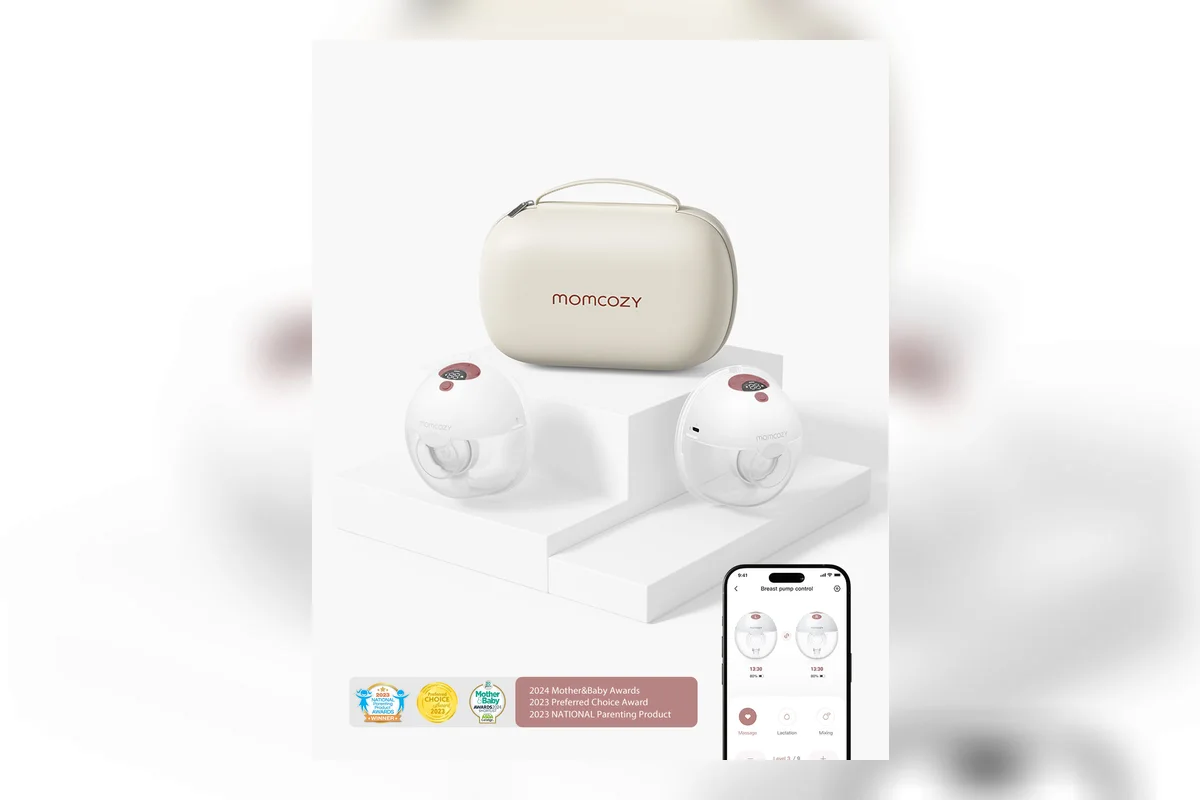
Momcozy M5 Smart Wearable Breast Pump
App-tracked, fully in-bra and cord-free, so frequent and overnight sessions are easy to keep up — the part of supply-building that actually matters. Moderate 285 mmHg suction (Momcozy-stated), but frequency beats power.
Check price at Momcozy →For a supply plan, the M5 Smart is the Momcozy I'd reach for, and the reason is consistency rather than power. It's fully in-bra and cord-free, so you can run a session while you cook, work, or settle the baby — the kind of friction-free pumping that turns "I'll fit one more in" into a session that actually happens. Momcozy lists three modes (stimulation, expression, mixed) and nine levels, and the app adjusts them, tracks output, and shows stats by day, week or month — genuinely useful when you're trying to hold a frequency and see whether your routine is moving the trend. It weighs 8 oz, holds 5.4 oz per cup, runs a Momcozy-stated ~180 minutes per charge, and uses the DoubleFit flange, at $199.99. The honest caveat: at a Momcozy-stated 285 mmHg, suction is moderate, not class-leading — but for supply that's the right priority order, because the routine, not the motor, is what builds milk.
- Pros: cord-free in-bra design makes frequent and overnight sessions easy to keep; app tracks output so you can see if your routine is working; 3 modes / 9 levels including a stimulation/letdown mode; light at 8 oz; DoubleFit flange for fit.
- Cons: moderate Momcozy-stated 285 mmHg suction (not the lever for supply, but worth knowing); as an in-bra cup pump it's position-sensitive — a cup that drifts off-center can break the seal and drop output, so a snug pumping bra helps; owners most often name the M5 in reliability complaints, so register the one-year warranty and keep your receipt.
Best budget add-on cup: Momcozy S9 Pro

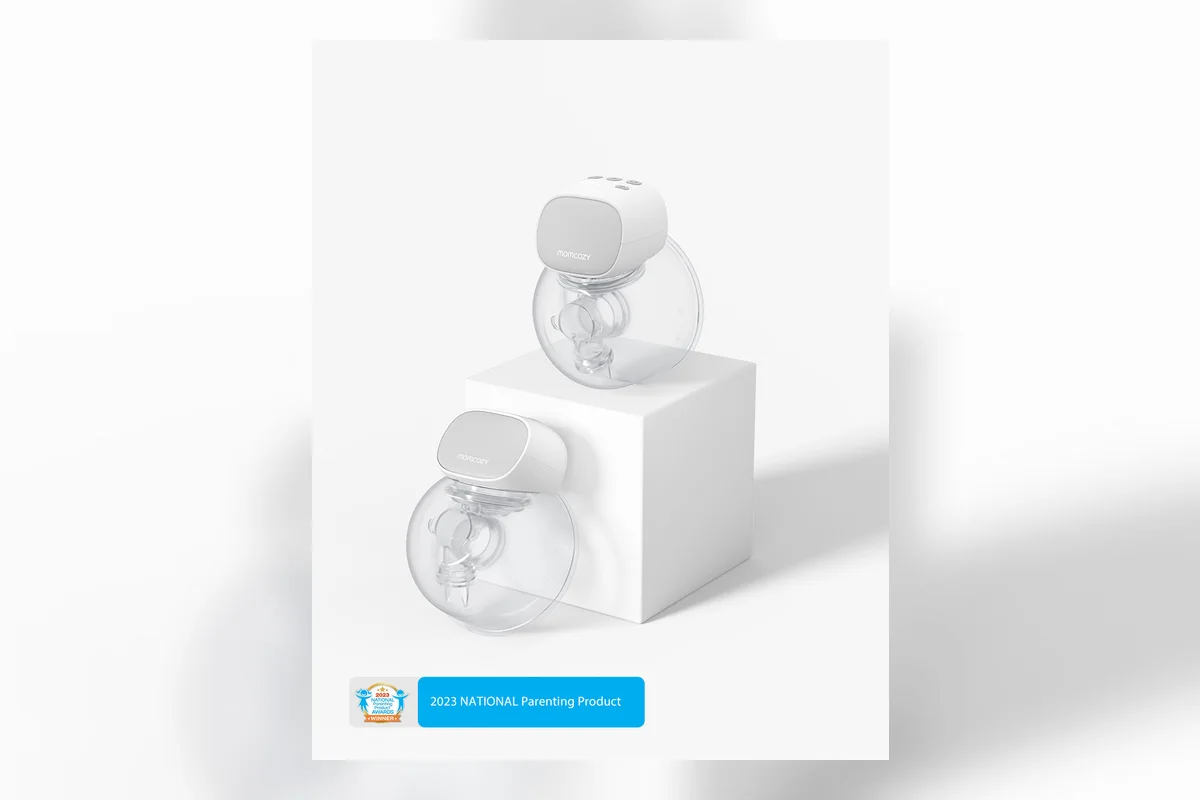
Momcozy S9 Pro Wearable Breast Pump
The cheapest way to add more cord-free sessions to your day. Quiet, four included flange sizes for fit, and a Momcozy-stated ~9 sessions per charge — an older, no-frills model, but a sensible value or second cup.
Check price at Momcozy →If the goal is simply more sessions for less money, the S9 Pro is the value entry, and it does the one job a supply plan needs: it lets you pump hands-free, often, without thinking about it. It's cord- and tube-free, quiet, ships with four flange sizes (17/19/21/24 mm) so most people can dial in the fit that actually drives output, and Momcozy states about nine sessions per charge. At $119.99 it's the cheapest wearable in this guide, which makes it a smart second cup to keep at the office or by the bed so a session is never more than an arm's reach away. The honest caveats: it's an older, no-frills model with no app, and Momcozy has effectively superseded it with the S12 Pro in its own range. For your primary daily pump, the small step up to the S12 Pro or the app-tracked M5 buys real value — but as a budget way to add frequency, the S9 Pro holds up.
- Pros: lowest price here at $119.99; cord-free, lightweight and quiet, so extra sessions are easy to add; four included flange sizes to get fit right; Momcozy-stated ~9 sessions per charge; great as a spare second cup.
- Cons: older, no-frills model with no app or output tracking; fewer modes and refinements than the M5; superseded by the S12 Pro in Momcozy's own lineup — better as a secondary or value cup than a feature flagship.
Don't let a sore, ill-fitting flange sabotage frequency
Here's the trap I'd most want a friend to avoid: pumping harder to chase output, getting sore, and then skipping sessions because it hurts — which is the one thing that genuinely lowers supply. Comfort isn't a luxury in a supply plan; it's what keeps the plan running. The biggest comfort variable is flange size: a shield too large or too small pinches, rubs, and drains poorly no matter how good the motor is. Measure your nipple diameter (not including the areola) and size to that — which is exactly why I value pumps that include multiple sizes, like the four inserts bundled with the S9 Pro and Momcozy's DoubleFit flange on the M5. Start every session on the lowest comfortable suction that still triggers a letdown and only climb as needed; the goal is a strong, painless letdown, not the highest number the dial allows. If pumping is consistently painful, that's a fit (or latch) problem to solve before you add sessions, and a good moment to loop in an IBCLC.
Frequently asked questions
Yes — frequency is the main lever. Lactation works on supply and demand: the more often and more completely the breast is emptied, the stronger the "make more milk" signal, because milk left sitting contains a feedback protein that tells the breast to slow down. When building supply, most guidance points to emptying 8 to 12 times a day (breastfeeds and pumps combined) and not skipping the overnight, rather than pumping longer or harder in a single session.
Not on its own. Past a comfortable, effective level, more suction mostly causes soreness — which makes you pump less and can lower supply. The FDA's pump-buying guidance emphasizes the right flange size and the lowest comfortable setting, not the highest. The wearable pumps in this guide reach a Momcozy-stated 285 mmHg or more, which is already plenty; how often and how completely you empty matters far more than the suction number.
Power pumping clusters several short pump-and-rest intervals into a single hour — for example pump 20 minutes, rest 10, pump 10, rest 10, pump 10 — once a day, to imitate a baby's evening cluster feed and send a concentrated "make more" demand signal. It's one of the most-recommended supply tactics and usually shows results over several days of consistency rather than instantly. The full step-by-step is in our power pumping guide.
Because supply responds to a sustained change in demand, give a new routine at least three to seven days of consistency before judging it, and longer for a bigger increase. Day-to-day and even session-to-session output naturally varies, so look at the trend across days rather than a single low pump. If you've held a frequent routine consistently and supply still isn't budging, that's the point to see an IBCLC or your doctor.
A wearable's advantage for supply isn't extra power — it's that being cord- and tube-free makes frequent and overnight sessions far easier to actually do, and a skipped session is the most common reason supply stalls. Just keep the cups well-seated (a snug pumping bra helps), get your flange size right, and make sure you're draining well, since an in-bra cup that drifts off-center can lose its seal and under-empty.
If supply is genuinely low despite a frequent, consistent pumping routine — or if pumping is painful, the baby isn't gaining weight, or you suspect a latch, hormonal, or medication issue — see an IBCLC lactation consultant or your doctor. Pumping technique and gear can't fix a medical cause of low supply, and some causes need treatment. This guide covers the demand-side mechanics; it isn't a substitute for individualized medical care.