

Affiliate disclosure: This post contains affiliate links. If you buy through them, I may earn a small commission — at no extra cost to you. I only recommend products I'd point a friend to, and my editorial opinions are my own. Full disclosure here.
"Hospital-grade" is a marketing term, not a certification — the U.S. FDA doesn't define it or grade pumps that way. What the FDA actually distinguishes is multiple-user versus single-user pumps, and that distinction — not the "hospital-grade" label — is the one that should decide what you buy or rent. I'm a former cosmetic chemist, so I'm allergic to superlatives on a box; here's what the phrase really means, when a true multi-user rental pump is worth it, and why most parents are better served by a strong personal pump.
The short version: if you have a genuine medical or supply need — a baby in the NICU, a preemie, trouble establishing supply, or exclusively pumping in the early weeks — a true multi-user rental pump (Medela Symphony, Spectra S3 Pro) is the right tool, and you usually rent it rather than buy it. For everyday pumping and the return to work, a strong personal pump — including the wearables marketed as "hospital-grade strength" — is the practical, far cheaper pick. The trick is knowing which situation you're in.
Key Takeaways
- "Hospital-grade" isn't regulated. The FDA doesn't recognize or define the term — it encourages manufacturers to say "multiple user" or "single user" instead, because companies use "hospital-grade" to mean different things.
- What actually matters: a strong, multi-user-safe closed system, adequate suction, and the right pump for your situation — not the word on the label.
- True multi-user rental pumps (Medela Symphony, Spectra S3 Pro) are built so milk never touches the shared motor, are meant to be rented (~$65–100/month), and are worth it for a real medical/supply need.
- Personal pumps marketed "hospital-grade" — including Momcozy's V1 Pro — mean strong suction on a single-user pump, not a certified multi-user rental. For everyday use, that's exactly what most parents need.
- Most parents don't need a rental. If you have no medical need, a strong personal wearable is the cheaper, more practical choice.
What "hospital-grade" actually means (and doesn't)
Here's the part the marketing won't tell you: "hospital-grade" is not a category the U.S. Food and Drug Administration recognizes. There's no FDA "hospital-grade" stamp, no minimum suction it certifies, and no consistent definition — so two pumps can both say "hospital-grade" and mean completely different things. The FDA's own guidance on buying and renting a breast pump addresses this directly, and back in 2013 the agency urged manufacturers to drop the phrase in favor of clearer language: "multiple user" and "single user."
That's the distinction that carries real meaning. A multiple-user (multi-user) pump is engineered so that breast milk can never reach the working parts of the pump that get shared between people — a true barrier between the milk path and the motor. That's what makes it safe for more than one person to use, provided each user has her own accessories kit (collection bottles, breast shields/flanges, valves, tubing). A single-user pump is built for one person and isn't designed to be shared, because the design can't guarantee that separation over many users.
So when a box says "hospital-grade," it's telling you about vibes, not specs. The questions worth asking are concrete: Is it a closed system? Is it actually built for multiple users? How strong is the suction, and does it fit me? Those are answerable. "Hospital-grade" isn't.
Multi-user rental vs. personal "hospital-grade" pump, at a glance
| Pump | Type | System & suction | Cost |
|---|---|---|---|
| Medela Symphony | True multi-user rental | Closed system; 2-Phase Expression Technology | Rented, ~$65–100/mo + kit |
| Spectra S3 Pro | True multi-user rental | True closed system; 0–270 mmHg, up to 70 cycles/min | Rented (hospitals/programs) + kit |
| Momcozy V1 Pro | Single-user wearable ("hospital-grade") | Anti-backflow cup; up to 300 mmHg; 15 levels / 3 rhythms | $199.99 (buy) |
| Momcozy M5 Smart | Single-user wearable (everyday) | In-bra; app; 3 modes / 9 levels; DoubleFit flange; 8 oz | $199.99 (cups from $119.99) |
| Spectra Synergy Gold | Single-user personal (sold "hospital-strength") | True closed system; up to 270 mmHg per side; dual motor | Buy (often via insurance) |
Specs verified from each manufacturer's own product page; rental pricing from rental providers, June 2026. Rental rates and sale prices vary by provider and region — treat the source page as the live number.
A true hospital-grade pump = a multi-user rental (here's when it's worth it)
If "hospital-grade" should mean anything, it means the pumps hospitals actually put in rooms and lactation programs rent out: true multi-user pumps. The two names you'll hear most are the Medela Symphony and the Spectra S3 Pro. The Symphony runs Medela's research-based 2-Phase Expression technology and is a closed-system, multi-user design rented to mothers with a medical need; the Spectra S3 Pro is described by Spectra as a hospital-grade, multi-user pump with a true closed system, delivering 0–270 mmHg and up to 70 cycles per minute, made for hospitals, birth centers and rental programs. Both are engineered so the milk path stays separate from the shared motor, which is the whole point of a multi-user pump.
Crucially, you usually rent these rather than buy them — they're expensive to own and overkill once you're past the situation that called for one. Rental runs roughly $65–100 a month depending on the provider, plus your own personal accessories kit, and they're often partially covered by insurance with a doctor's documentation of medical need. A true hospital-grade rental is genuinely the right call when:
- Your baby is in the NICU or born preterm and you're pumping to establish a supply before or alongside breastfeeding.
- You're working to build or rescue a low supply in the early weeks, when efficient, frequent removal matters most.
- You're exclusively pumping early on and need a workhorse that can handle 8+ sessions a day reliably.
In those scenarios the extra power, durability and closed-system hygiene earn their keep — and renting means you only pay for the weeks you actually need it. Talk to your lactation consultant or pediatrician; for the NICU/establishing-supply situations, that's the pump they'll point you to.
"Hospital-grade strength" on a personal pump is a different thing
Now the part that confuses everyone. Plenty of personal, single-user pumps — wearables included — are marketed as "hospital-grade" or "hospital-strength." Momcozy's V1 Pro literally has "Hospital-Grade" in its name; Spectra sells the single-user Synergy Gold as a hospital-strength dual-motor pump (up to 270 mmHg per side, true closed system). Here's the honest read: on a personal pump, "hospital-grade" describes suction strength, not a multi-user certification. It's saying "this is a strong, capable pump" — which can be perfectly true — but it does not mean the pump is built or approved for multiple users, and it shouldn't be shared.
That's not a knock on those pumps. A single-user wearable that hits up to 300 mmHg, like the V1 Pro, is plenty of suction for the everyday, return-to-work pumping that most parents are actually doing — and the FDA's own guidance stresses that fit, comfort and proper flange sizing matter more for output than chasing a bigger headline number. The mismatch only becomes a problem if you read "hospital-grade" on a $200 personal pump and assume it's the same machine the NICU rents out. It isn't. It's a strong personal pump using a marketing phrase — which, for the job most parents need it to do, is genuinely the smarter buy.
So do you actually need a hospital-grade pump?
For most parents, no — and that's good news for your budget. Here's how I'd decide, in plain terms.
If you have a genuine medical or supply need → rent a true multi-user pump
NICU baby, preemie, establishing or rescuing supply, exclusively pumping in the early weeks: this is what true hospital-grade rentals exist for. Rent a Medela Symphony or Spectra S3 Pro for the weeks you need it (typically $65–100/month plus your own kit), and check coverage — these are frequently rentable through insurance with documentation, and the same DME benefit that gets you a personal pump can help. I walk through the paperwork in how to get a free breast pump through insurance.
For everyday + mobility → a strong personal wearable is the practical pick

Momcozy M5 Smart Wearable Breast Pump
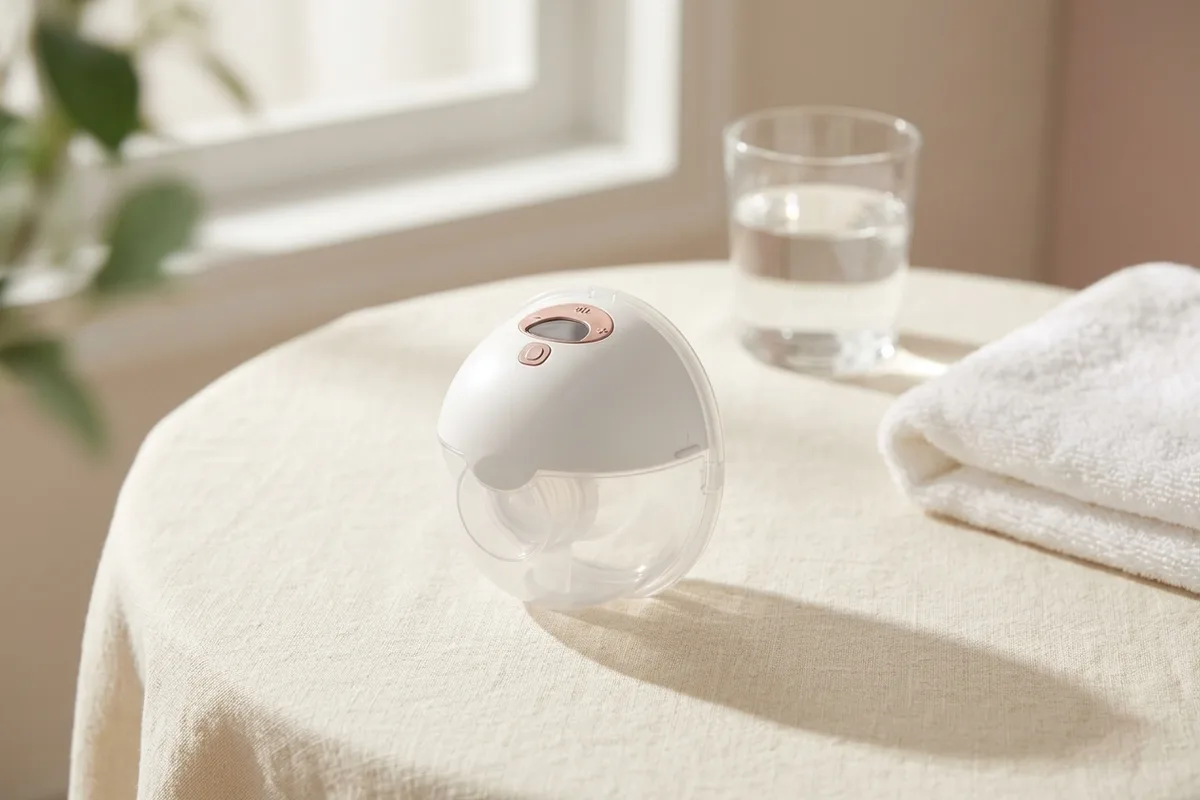
A true app-controlled, fully in-bra wearable at roughly half the price of the premium names — 8 oz, 3 modes, 9 levels, DoubleFit flange. A single-user personal pump that nails the everyday, return-to-work job.
Check price at Momcozy →If you don't have a medical need — you're heading back to work, you want to pump hands-free around the house, you want a stash without being tethered to a wall outlet — you don't need to rent a hospital machine. A strong, comfortable personal wearable does the job, and the Momcozy M5 Smart is where I'd start most parents: fully in-bra, app-controlled, 3 modes and 9 levels, a DoubleFit flange for sizing, and just 8 oz, at $199.99 (single cups from $119.99). It's a single-user pump — I won't dress it up as a rental — but for everyday mobility that's exactly the category you want.

Momcozy V1 Pro Wearable Breast Pump
Up to 300 mmHg and 15 levels at $199.99 — strong suction on a single-user wearable. Momcozy markets it "hospital-grade," meaning power, not a multi-user certification. For at-home use, that power is what most parents actually want.
Check price at Momcozy →Want the strongest suction in a wearable without renting? The Momcozy V1 Pro lists up to 300 mmHg with 15 suction levels and 3 rhythms, plus an anti-backflow collection cup, at $199.99. Momcozy is the brand using the "hospital-grade" label on it, and now you know exactly what that claim means here: serious suction on a single-user personal pump, not a certified multi-user rental. For a parent who wants power and mobility at home — not a NICU rental — that's an honest fit. A common, sensible setup is to rent a true multi-user pump if you have a medical need early on, then move to a personal wearable like these for the long return-to-work stretch.
If you're still weighing pump types — wearable vs. portable vs. plug-in — start with our full breast pump buying guide, and for the hands-free category specifically, compare the field in the best wearable breast pumps of 2026.
Frequently asked questions
It's a marketing term, not an official rating. The U.S. FDA doesn't recognize or define "hospital-grade," and there's no consistent industry standard — so different companies use it to mean different things. In practice it's used two ways: for true multi-user rental pumps that hospitals use (built so milk never touches the shared motor), and as a strength descriptor on personal pumps. The meaningful distinction the FDA actually uses is "multiple user" versus "single user."
No. The FDA does not recognize the term "hospital-grade" and there is no FDA certification for it. Because companies define it inconsistently, the FDA encourages manufacturers to label pumps as "multiple user" or "single user" instead — language that tells you whether a pump is actually designed to be shared. So "hospital-grade" on a box doesn't, by itself, tell you a pump meets any specific FDA standard.
Most parents don't. A true multi-user rental pump is worth it for a genuine medical or supply need — a NICU or preterm baby, establishing or rescuing low supply, or exclusively pumping in the early weeks — and in those cases you usually rent one. For everyday pumping and the return to work without a medical need, a strong personal pump or wearable does the job at a fraction of the cost. When in doubt, ask your lactation consultant which situation you're in.
True multi-user pumps like the Medela Symphony and Spectra S3 Pro are typically rented, not bought — they're expensive to own and meant for temporary, high-demand use, with rental running roughly $65–100 a month plus your own personal accessories kit (and often partially covered by insurance with documentation). Personal pumps that are marketed "hospital-grade" or "hospital-strength," like the Momcozy V1 Pro or Spectra Synergy Gold, are sold to own — but those are single-user pumps, not the multi-user rental machines.
Momcozy markets the V1 Pro as "hospital-grade" and lists up to 300 mmHg of suction with 15 levels and 3 rhythms. On a personal pump, "hospital-grade" refers to suction strength, not a multi-user certification — the V1 Pro is a single-user wearable, not a shared rental machine like the Medela Symphony or Spectra S3 Pro. That's not a downside for home use: up to 300 mmHg is strong suction, which is exactly what most parents want for everyday and return-to-work pumping. Just don't read the label as "approved to share."
A multiple-user pump is engineered so breast milk can never reach the shared working parts (the motor), with a barrier protecting the milk path — which is what makes it safe for more than one person, as long as each user has her own accessories kit (flanges, bottles, valves, tubing). A single-user pump is designed for one person and shouldn't be shared. This is the practical distinction the FDA recommends over "hospital-grade," because it actually tells you whether a pump can be safely used by more than one person.