

Affiliate disclosure: This post contains affiliate links. If you buy through them, I may earn a small commission — at no extra cost to you. I only recommend pieces I'd point a friend to, and my editorial opinions are my own. Full disclosure here.
If you're starting a jewelry resale — a little boutique, an Instagram or Etsy shop, a permanent-jewelry pop-up, or just buying in bulk to gift — the single decision that makes or breaks you isn't your branding or your photos. It's the material you stock. As a former cosmetic chemist, I can tell you the fastest way to kill a new jewelry shop is buying pretty pieces that turn customers' skin green and come back as returns. This is an honest guide to buying wholesale jewelry that sells and lasts: what to look for, how minimums and margins actually work, why payment terms matter for cash flow, and how to test inventory without betting the farm.
Key Takeaways
- Material is everything for resale. The pieces that sell out and don't get returned are made of durable, skin-friendly metal — 316L surgical steel, gold-filled, or PVD-coated steel — not the cheap gold-plated brass that turns skin green.
- Understand MOQ + margin before you buy. Minimum order quantities, keystone (roughly 2× cost) markup, and payment terms decide whether a "good deal" is actually profitable.
- Cash flow beats inventory. Net terms (paying weeks after you receive stock) let a new shop sell first and pay later — the difference between scaling and stalling.
- Start small, reorder what sells. Buy a tight test assortment, watch what moves, and re-buy winners. Don't over-commit on day one.
- My pick for durable, low-return stock: Stylr's wholesale program — waterproof stainless steel and gold-filled demi-fine jewelry, the exact low-return material this guide recommends.
1. What to look for: jewelry that actually sells and lasts
Every return, bad review and "the gold came off" message traces back to one thing — the metal. Here's the materials reality, from someone who reads spec sheets for a living. For resale, you're choosing between a few buckets, and only some of them survive a customer wearing the piece in the shower, at the gym and to bed.
| Material | Survives customer wear? | Skin-safe? | Return risk |
|---|---|---|---|
| 316L surgical steel | Yes — corrosion-resistant core | Low-nickel-release (fine for most) | Low |
| Gold-filled | Yes — thick bonded gold layer | Yes (real karat-gold surface) | Low |
| PVD gold on 316L steel | Yes — hard vacuum-bonded coating | Low-release base | Low |
| Gold vermeil | Partly — coating wears with water | Usually (sterling base) | Medium |
| Gold-plated brass | No — thin plating wears fast | Risky (brass can expose nickel) | High — turns skin green |
The pattern is clear: the metals with a non-reactive core (steel) or a thick precious layer (gold-filled, true vermeil) are the ones that survive daily wear and stay on the customer instead of coming back to you. Here's what each bucket means for your shelf:
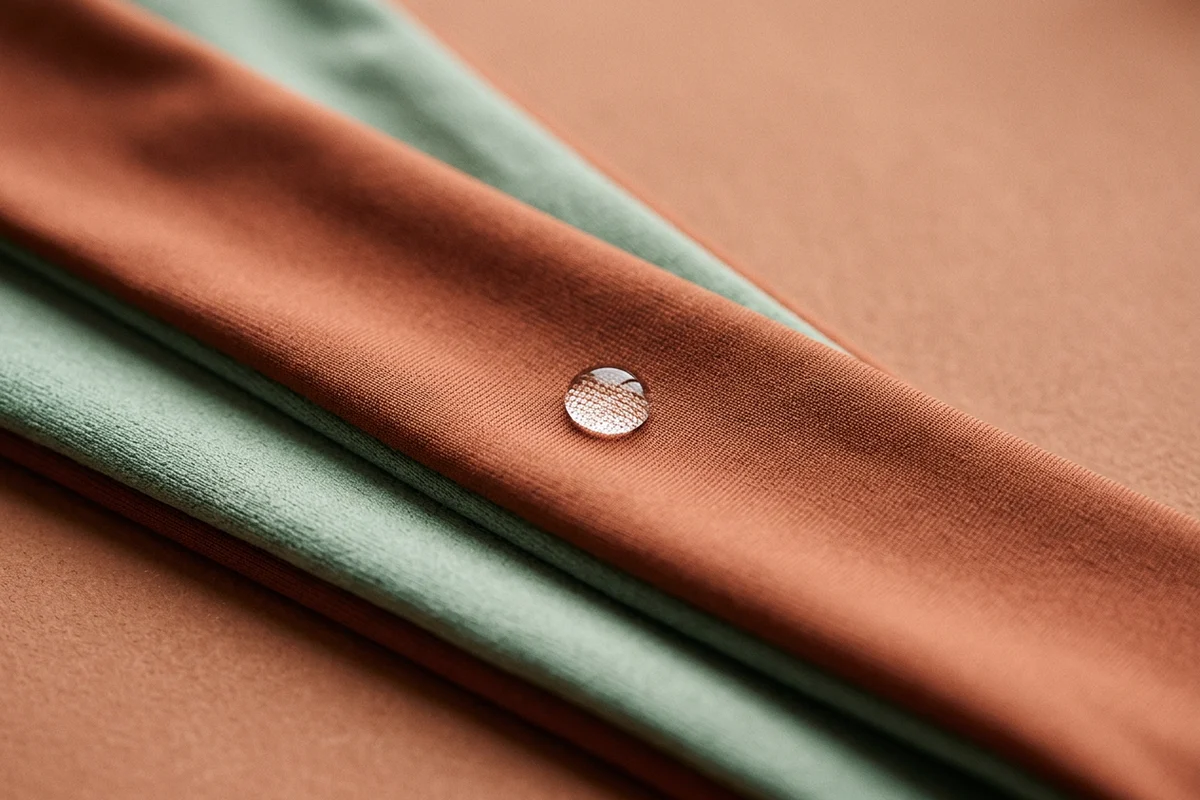
- 316L surgical steel — the workhorse of modern resale jewelry. It resists corrosion through a self-repairing chromium-oxide layer, so it won't rust or turn skin green, and it's low-nickel-release (safe for most sensitive skin). It survives showers, sweat and pools, which is exactly why "waterproof jewelry" shops are built on it. Durable, affordable, low-return.
- Gold-filled — a thick, bonded layer of real karat gold over a base. The U.S. FTC's Guides for the Jewelry Industry (16 CFR Part 23) require the gold to be at least 1/20 (5%) of the item's total weight, so it wears for years — far longer than plating. It's the demi-fine sweet spot: looks and feels like fine gold, costs a fraction of solid.
- PVD gold on 316L steel — physical vapor deposition bonds the gold color to steel in a vacuum, producing a coating roughly 2,000–3,000 Vickers hardness versus about 200–600 for ordinary electroplating. Hard coating + non-reactive core = the most water-and-tarnish-durable budget finish, which is why it can be sold as waterproof when plated brass cannot.
- Gold vermeil — a thicker gold coating (≥2.5 microns of ≥10k gold) over a sterling-silver base. Genuinely nice for a demi-fine display case, but it's still a coating that wears with water, so it's careful-wear, not shower-proof.
- 🔴 Gold-plated brass — the trap. Thin gold over a brass core. Once that micron-thin plating wears (and it does), the brass underneath reacts with moisture and skin acids and turns skin green. This is the #1 source of "the gold came off / it stained my neck" returns. Cheap to buy, expensive to sell. Avoid it as your core line, no matter how good the per-unit price looks.
If you sell to customers who want to wear a piece every day — and that's most customers now — durable metal isn't a premium feature, it's the whole product. Stock the materials that survive real life and your return rate, your reviews and your reorders all take care of themselves.
Where I'd source it: the cleanest match for "durable, low-return, demi-fine" is Stylr's wholesale program for stockists → — its whole catalog is waterproof 316L stainless steel and gold-filled, the exact materials above, with a low $100 minimum and net-60 terms so you can test before you commit. More on why those terms matter below.
2. MOQ, minimums and margins (the math that keeps you in business)
Wholesale has its own vocabulary, and three terms decide whether a "deal" is actually profitable:
- MOQ (minimum order quantity) — the smallest amount a supplier will sell you, set as a dollar minimum (e.g. a $100 opening order), a per-style minimum (e.g. 3 of each), or both. For a new shop, a low or no-minimum supplier is gold: it lets you spread a small budget across more styles and find your bestsellers before you commit deep.
- Wholesale (trade) price vs. retail (MSRP) — your cost vs. what you charge. The gap between them is your gross margin, and it has to cover everything: packaging, shipping, transaction fees, returns, your time, and profit.
- Keystone markup — the classic retail rule of thumb is "keystone," meaning you price at roughly 2× your wholesale cost (a 50% margin). Jewelry, with its small size and high perceived value, is often marked up well beyond keystone, which is part of why it's such a friendly category for a small shop. (That's general retail practice, not a guarantee; your right number depends on your market, brand and costs.)
A quick worked example using keystone: if a piece costs you $12 wholesale and you price it at $24 retail, you keep $12 gross per sale — before fees, shipping and returns. That's why durable material matters even to the math: a returned piece doesn't just cost you the refund, it wipes out the margin on the next sale too. Cheap stock with a high return rate can have negative real margin even when the spreadsheet looks fine.
3. Payment terms & cash flow (why "net terms" matter for a new shop)
This is the part new sellers underestimate, and it's often the difference between growing and stalling. When you buy wholesale you'll see two models:
- Pay upfront — you pay for the inventory now, then hope it sells. Your cash is tied up in boxes on a shelf, which caps how much you can stock and how fast you can grow.
- Net terms — you receive the stock now and pay later (net-30, net-60, etc. = due in 30 or 60 days). This is huge for a small shop: you can list and sell the pieces, collect from your customers, and then pay your supplier out of revenue you've already earned. It turns inventory from a cash drain into something close to self-funding.
For a brand-new boutique or side hustle with limited working capital, net terms are the closest thing to a cheat code: they let you test and stock more than your bank balance alone would allow, without taking on a loan. When you compare suppliers, weigh the payment terms as heavily as the unit price — a slightly higher cost with net-60 can be far better for cash flow than a rock-bottom price you have to pay today.
4. Testing inventory without overcommitting
The most common new-shop mistake is buying deep on day one because a style is "obviously going to sell." You don't know what sells until customers vote with their cards. So treat your first order as a test, not a bet:
- Buy a tight, varied assortment first — a handful of each of several styles rather than a big stack of one. You're sampling demand, not committing to a winner.
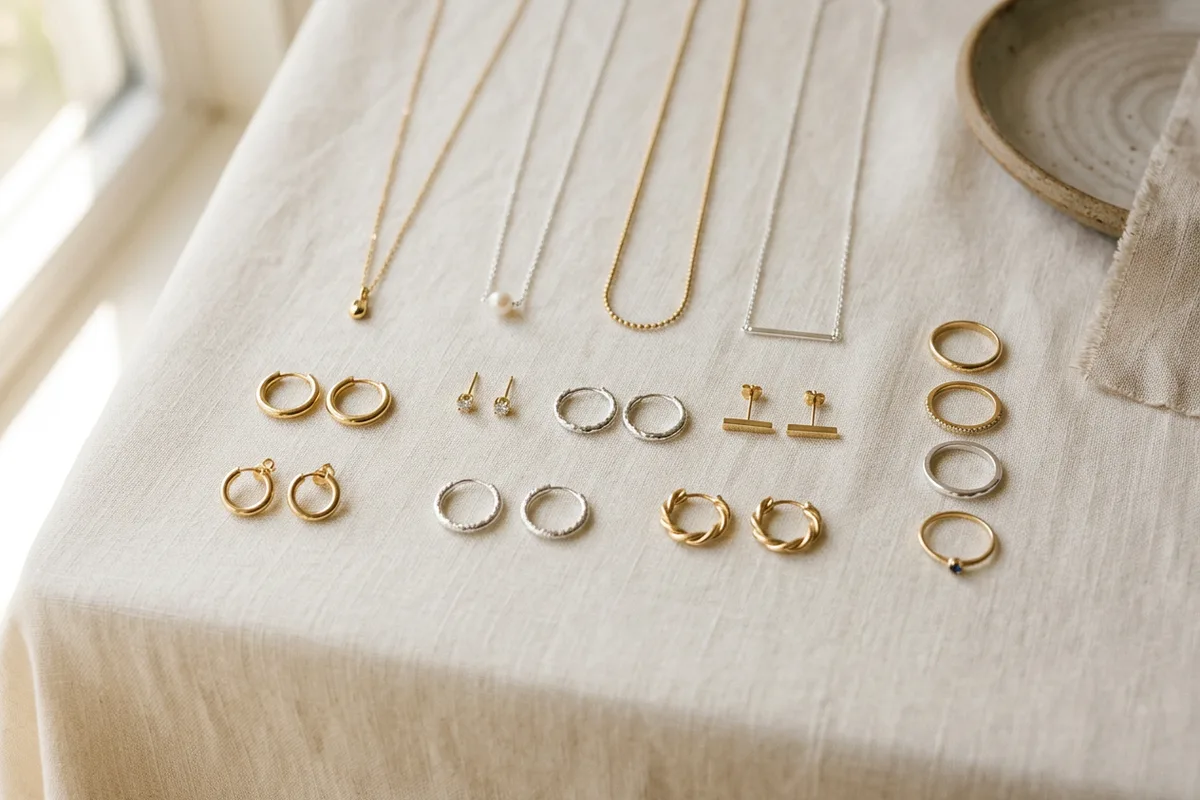
- Cover the everyday core — for jewelry that means the layering staples that always move: simple chains, huggie hoops, studs, a few stackable rings. Trend pieces are dessert; the everyday basics are the meal.
- Let a low/no minimum work for you — a low opening order is exactly what makes this testing possible. The whole point of a low MOQ is to de-risk the experiment.
- Reorder winners, drop the rest — after a few weeks, double down on what sold through and quietly retire what didn't. This is how you build a catalog that's all bestsellers.
- Risk-free first orders help most of all — a supplier whose first order is covered by free returns lets you test an assortment with almost no downside: if something doesn't move, you're not stuck eating it.
Start narrow, learn fast, re-buy the winners. It's slower than going all-in, and it's why shops that do it are still around a year later.
5. Shipping & lead times
Boring, but it decides whether your shelves are full when customers show up. Two things to pin down with any wholesale supplier before you rely on them:
- Lead time — how long from placing your order to stock in hand. A domestic supplier shipping in a few days lets you reorder bestsellers fast; an overseas supplier with multi-week lead times means you have to forecast and buy ahead, tying up more cash. For a small shop, shorter, reliable lead times usually beat a slightly cheaper price, because they let you run lean and restock winners quickly.
- Shipping cost & reliability — factor freight into your true cost per piece (it eats margin), and value a supplier who ships consistently. A "great price" that arrives three weeks late, after your pop-up, isn't a great price.
If you're running time-sensitive events — a market booth, a holiday push, a permanent-jewelry pop-up — favor suppliers with predictable, faster fulfillment so a slow shipment never leaves you with empty cases on your busiest day.
6. What your shop actually needs (and the supplier I'd choose)
Strip away the jargon and a new jewelry seller really has the same handful of worries. Here's each one, what actually answers it, and — after everything above — why I keep pointing first-time stockists to the same place.
| What's actually on your mind | What answers it |
|---|---|
| "What if it doesn't sell and I'm stuck with it?" | A low opening order plus free returns on your first order — a test that flops costs you almost nothing. |
| "What if it gets returned and tanks my reviews?" | Durable, skin-safe metal (316L steel, gold-filled) that survives daily wear — the single biggest lever on your return rate. |
| "I don't have the cash to buy inventory upfront." | Net-60 terms — you sell the pieces and collect from your customers before the supplier's invoice is even due. |
| "Will my shop look cheap, or premium?" | Demi-fine, waterproof pieces that look and wear like fine jewelry — not market-stall plating. |
| "Can I trust the supplier before I go deep?" | Clear terms, materials you can verify, and a low-risk first order so you prove it yourself first. |
Here's why this matters so much: most wholesale falls into one of two traps. On one side, cheap overseas plated-brass — irresistible on per-unit price, but it wears through, turns skin green, and comes back to you as "the gold came off" returns and one-star reviews. On the other, traditional wholesalers with high minimums that make you bet hundreds of dollars on inventory before you have a single customer. Neither is built for how a real new shop actually starts: small, careful, and learning as it goes.
The one supplier I've found that answers all of these at once — and the reason this guide keeps circling back to it — is Stylr's wholesale program. Its whole catalog is the durable, low-return material this article is built around (waterproof 316L stainless steel and gold-filled), it opens at a low $100 minimum, runs on net-60 terms, and covers your first order with free returns. That specific combination — premium-looking, skin-safe pieces you can test in a small, risk-light first order, and pay for after they sell — is what de-risks the riskiest part of starting a shop: your first buy. It's why it's my pick for a first-time stockist, not just a place that happens to sell wholesale.
7. Starting a jewelry side hustle (a quick practical playbook)
If you're going from "buying in bulk" to actually selling, a few practical notes — none of this is legal or tax advice, just the lay of the land:
- Sort out the basics first. Most U.S. states require a sales-tax permit (and often a resale certificate) to buy wholesale and collect sales tax; many wholesale suppliers ask for that resale/EIN info at signup. Check your own state and locality — requirements genuinely vary — before you open a shop. A reseller permit is also what lets you buy wholesale tax-free in many states.
- Pick a lane and a channel. An Instagram shop, an Etsy storefront, a Shopify site, a market booth, or a permanent-jewelry pop-up each suit different inventory. Permanent jewelry, in particular, is having a moment.
- Permanent-jewelry pop-ups — the "welded-on, no-clasp" chain bracelet you size and weld onto the customer at an event. The model is appointment- or walk-up-based, and the supplies you need are chain by the foot, jump rings, connector findings, and a welder (a small pulse-arc or micro-welder). 🔴 The metal matters even more here than in regular resale: it's literally welded on and worn 24/7 through showers and workouts, so gold-filled and 316L stainless steel are the standard — they're durable, skin-safe and won't tarnish against the skin. Plated brass is a non-starter for something a customer never takes off.
- Start lean. "How much to start a jewelry business" has a wide range, but the smart version is small: a low opening wholesale order, a phone for photos, and a simple storefront. Reinvest what sells. (See the FAQ below for more on startup cost.)
Whichever route you take, the durable-material rule from section 1 carries all the way through — for a permanent-jewelry pop-up it's not optional, it's the whole premise.
Frequently asked questions
For low returns and repeat customers, stock durable, skin-safe materials: 316L surgical stainless steel, gold-filled, or PVD gold on steel. These survive daily wear, showers and sweat, and won't turn skin green. Avoid cheap gold-plated brass as your core line — its thin plating wears fast and the brass underneath reacts with skin, which is the leading cause of "the gold came off" returns. Everyday staples (chains, huggie hoops, studs, stackable rings) sell most consistently.
In the U.S., most states require a sales-tax permit and often a resale certificate to buy wholesale for resale and to collect sales tax, and many wholesale suppliers ask for that resale or EIN information when you sign up. A reseller permit is also what lets you buy inventory tax-free in many states. Requirements vary by state and locality, so check your own state's rules — this is general information, not legal or tax advice.
The classic retail rule of thumb is keystone — pricing at roughly twice your wholesale cost, a 50% gross margin. Because jewelry is small and has high perceived value, many shops mark up well beyond keystone. That's a general practice, not a fixed rule: your right number depends on your market, brand positioning, and all-in costs including packaging, shipping, fees and returns. Remember that a high return rate erodes real margin, so durable inventory protects your numbers.
Yes — it's one of the best resale materials. 316L surgical stainless steel resists corrosion through a self-repairing chromium-oxide layer, so it won't rust or turn skin green, and it's low-nickel-release, meaning it's fine for most sensitive skin. It survives showers, sweat and pools, which is why "waterproof jewelry" shops are built on it. Durable, affordable and low-return, it's an ideal core line for a new boutique or side hustle.
It varies widely, but a lean start is very achievable. Your main cost is opening inventory, so a supplier with a low minimum order and net payment terms lets you begin with a small outlay and pay for stock after it sells. Beyond inventory you mainly need a way to take photos and a simple storefront (Instagram, Etsy or Shopify). For a permanent-jewelry pop-up, add a welder and findings. Starting small and reinvesting what sells keeps the upfront cost down.
Both have a gold surface over a base metal, but the thickness is worlds apart. The FTC requires gold-filled to have a bonded gold layer of at least 1/20 (5%) of the item's total weight, so it lasts for years and wears like fine jewelry. Gold-plated (electroplate) only requires about 0.175 microns of gold over any base — often brass — so it wears through quickly and the brass beneath can react with skin. For resale, gold-filled is a durable demi-fine choice; thin gold-plated brass is the high-return trap.
For more on the materials behind all of this, see my complete everyday jewelry guide, my ranking of the best waterproof jewelry brands of 2026, and my breakdown of the best affordable gold-tone jewelry that won't tarnish — the same material logic that protects your return rate is what makes a piece worth recommending in the first place.