

Affiliate disclosure: This post contains affiliate links. If you buy through them, I may earn a small commission — at no extra cost to you. I only recommend products I'd point a friend to, and my editorial opinions are my own. Full disclosure here.
I'm a former cosmetic chemist, so when a competitive swimmer asks how to train on her period without a tampon, I don't think about modesty. I think about an absorbent textile under load — how a saturated gusset behaves submerged in chlorinated water and then sheared sideways by a flip-turn. That's a very different physics problem than a pad on a pool deck, and almost no one writing about period swimwear talks about it honestly.
This guide is about underswimming: the layering trick swimmers use to get through practice without an internal product. It's the athlete branch of our main period swimwear guide, and most "best period swimwear" lists hand a competitive swimmer the bulkiest, highest-capacity suit they can find. For an athlete chasing split times, that's backwards. Below I'll explain the technique, the materials reality behind it, and rank the thinnest, lowest-drag bottoms that disappear under a regulation suit — plus the honest ceiling nobody states: no swim layer is a heavy-flow bunker underwater. For the "is it safe to swim on your period" questions, I'll point you to the right authorities; that's a doctor's lane, not mine.
Key Takeaways
- Underswimming = a thin period bottom worn under a tight race suit. The compression of the regulation suit locks the bottom in place and limits water ingress — see the technique and the step-by-step protocol.
- Thin wins here. Knix's paper-thin gusset — a weakness on a standalone heavy-flow list — is the lowest-drag pick for layering. See why the thinnest bottom ranks first.
- It's leak-resistance, not a heavy-flow fix. No swim layer "holds 4 tampons" submerged under flip-turn shear. For medium-plus days, double up with a low-volume disc.
- This is a training workaround, not a sanctioned racing solution. Swimmers disguise it as a "drag suit." Treat it as a practice tool.
- Chemical-safety frame: look for OEKO-TEX STANDARD 100; the Thinx PFAS case was a settlement, not a ban — I'll keep that honest in both directions.
What is underswimming? The drag-suit trick, explained
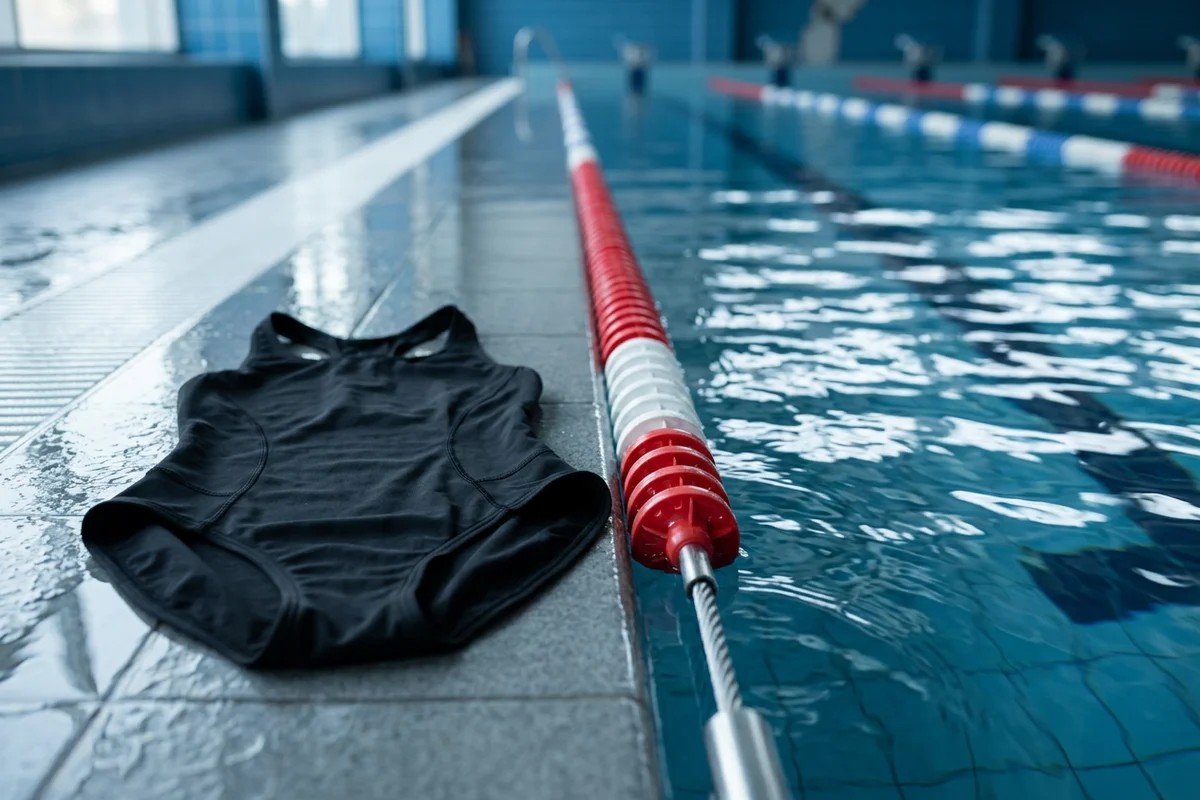
Underswimming — also called layering — means wearing a period swim bottom underneath a tight, regulation training or tech suit. The absorbent bottom isn't doing the work alone. It's the combination: a snug race suit pulled over the bottom compresses it against the body, which does two jobs at once — it slows water flushing through the absorbent core, and it stops the waistband rolling or shifting when you push off a wall.
The "drag-suit" part is the cover story. A drag suit is a second, looser suit swimmers wear over their race suit to add resistance in training, so layering a period bottom under your suit reads like the same harmless habit. Let me be plain, though: this is a training workaround, not a sanctioned racing solution — it isn't an approved competition setup, and I'm not telling you it's legal for racing. It's how a lot of athletes get through a two-a-day without an internal product.
For whether it's healthy to swim laps on your period at all — it generally is, but that's a clinical question — see the sibling guide on how period swimwear actually works, and defer safety specifics to your doctor.
The physics: why a saturated gusset behaves differently underwater
Here's the pain point every swimmer already knows and no brand will name: the pink puddle. You climb out of the pool, sit down, and a thin trail of faintly tinted water appears. That isn't a "leak" in the sense of a flood of blood. It's hydrostatic saturation at work — and understanding it is the whole game.
A period swim gusset is an absorbent core with a thin waterproof backing, not a sealed waterproof bag. The barrier layer — typically a polyurethane laminate (PUL) or TPU/PU film — resists fluid seeping outward onto your seat. It does not seal pool water out. So when you're submerged, the hydrophilic absorbent layer fills with chlorinated pool water. On exit, gravity and compression wring that water-loaded core out, carrying a heavily diluted pink tint. That's the puddle. It's tinted pool water, not a blood flood — but it also means the core's real absorbent capacity for your flow is already partly spent on holding pool water.
Now the athlete's real objection: drag. A bulky, fully saturated gusset is extra surface area and water mass sitting in your suit — measurable hydrodynamic drag that costs you over a race-pace set. That's why the "best heavy-flow" winner everywhere else — a thick, high-capacity gusset — is the wrong pick here. The thing that gives it capacity is the thing that slows you down. There's also flip-turn shear: a wall push-off and somersault throw sideways forces that roll or fold a loose waistband mid-turn. The fix isn't a tighter bottom alone; it's the layered race suit pinning it. Compression beats a grippy waistband on its own.
So here's the honest ceiling, stated outright: no swim layer holds "four tampons" underwater under load. Submerged absorbency is finite and already water-loaded, and shear forces work against you. Underswimming is genuinely good leak resistance for light-to-medium days. For a true heavy flow, it's a backup-not-a-bunker system, and you pair it with something internal. That's the honesty axis this page is built on. (The pink-puddle mechanism is plain materials physics — there's no published lab study putting a number on the puddle volume, so I won't invent one.)
How I evaluated these for athletes (no lab, just spec + physics)
To be upfront: this is an editorial ranking, not a lab study. I did not run leak tests, time anyone's splits, fit a panel of swimmers, or count "11 of 12 bottoms that passed" — distrust any affiliate post that claims it did. What I did do is read each brand's current spec sheet, verify the live US price on its own page, and judge each bottom on what a materials person can assess for this use: (1) gusset profile / thickness — thinner means less drag under a tech suit; (2) compression and cut — does it survive a push-off once a race suit is layered over it; (3) low-rise compatibility; (4) chlorine tolerance and dry time; and (5) an honest flow ceiling.
Brand absorbency figures are flagged as marketing claims — "up to N tampons" are dry-lab equivalences, not validated underwater. Where a rating appears it's labeled "Our score": my editorial opinion for the underswim use case, not a customer star-average. These are affiliate links (see the disclosure up top), and every pick has a real winning axis — I don't rank a higher payer first if a rival leads on merit. For chemical safety I lean on OEKO-TEX STANDARD 100 and the real Thinx settlement (more in the buying guide); clinical and flow-volume questions go to the authorities, not me.
Best period swim bottoms for underswimming, ranked
The order below is commission-first, but every row earns its place on a true athlete axis. Critically: Knix's thin gusset isn't a flaw I'm spinning into a virtue — for layering, low profile genuinely is the winning trait. Modibodi is listed honestly but is explicitly not the primary pick, because its capacity comes from bulk, and bulk is drag. I've deliberately left off teen one-piece swimwear here; a tween on a swim team should start at the period swimwear for teens guide, which covers one-pieces and first-period kits.
| Brand & bottom | Our score | Gusset profile / drag | Honest flow ceiling | PFAS / OEKO-TEX | Price | Best for |
|---|---|---|---|---|---|---|
| Knix Leakproof Bikini Swim Bottom (#1) | 4.5 | Thinnest, lowest drag | Light (~1–3 tampons) | No-intentional-PFAS; swim OEKO-TEX not claimed | $55 | Lowest-drag underswim pick |
| The Swim. Bikini (#2) | 4.1 | Thin, utilitarian low-rise | Light (~2 tampons) | "Non-toxic" vow; swim cert unverified | $30 | Cheapest way to test it |
| Saalt Disc (double-up) (#3) | 4.4 | Internal — zero drag | Medium+ (~50 mL collected) | PFAS lab-tested (cups/discs) | $35 | Heavier-day stack |
| Modibodi Bikini Brief – Super (#4) | 3.9 | Bulkiest, highest drag | Heavy (brand-claimed, dry-lab) | No-intentional-PFAS; OEKO-TEX claimed | $76.49 | Heavy practice day ONLY |
Prices verified from each brand's official US product page (linked in every section below) as of June 2026. Sale prices change often — treat the brand-site price as the source of truth. Absorbency figures are manufacturer marketing claims (dry-lab equivalence), not independently validated underwater.
1. Knix Leakproof Bikini Swim Bottom — best for underswimming
Knix Leakproof Bikini Swim Bottom
The thinnest gusset in the lineup — least drag, disappears under a tech suit. Pair with a disc above light flow.
Check price at Knix →On a standalone heavy-flow page, I'd ding the Knix Leakproof Bikini Swim Bottom for its paper-thin gusset. For underswimming, that same thinness is exactly why it ranks first. Knix builds its swim gusset as a thin three-layer system — silky top, super-absorbent middle, waterproof PU-film backing (its "FreshFix" tech) — in an 85% nylon / 15% spandex body. A thin profile means the lowest drag here and the cleanest disappearance under a snug suit. This is the bottom I'd start an athlete on.
The honest catch is in that same thin gusset: Knix's own copy puts capacity at roughly one to three tampons' worth — backup-grade. Fine for a light day or as the absorbent half of a double-up, but it is not a heavy-flow solution. The other friction is service: sale items are final-sale / store-credit-only and that isn't always clear at checkout, and support is chatbot-first. Buy at full price if you want return flexibility, and pair it with a disc for medium-plus days.
- Pros: thinnest, lowest-drag gusset — ideal for layering under a tech suit; three-layer PU-film barrier; broad XS–XXXXL sizing; a teen (KT by Knix) line exists for younger swimmers.
- Cons: light-flow ceiling (~1–3 tampons) — backup-only above light days; synthetic, not natural-fiber; "no intentional PFAS" rather than a PFAS-free seal, and swim-line OEKO-TEX isn't claimed; sale items final-sale, chatbot-first CS; premium price for a backup-grade tier.
2. The Swim. Bikini by The Period Company — cheapest way to try it
The Swim. Bikini
The low-risk $30 way to test underswimming before committing to a pricier bottom. Light-flow, utilitarian, exchange-only.
Check price at The Period Company →If you're not ready to spend $55 on a technique you haven't tried, the The Swim. Bikini from The Period Company is the cheapest credible entry at $30. (One correction: the brand's famous ~$9 product is its period underwear, not swimwear — its actual swim line runs $28–$30.) The build is a recycled-nylon shell over a polyester absorbent layer and a 100% polyester PUL barrier, so it has a real waterproof backing. It's a thin, low-rise, no-frills cut — fine, because under a race suit no one sees it.
The trade-offs are real. By the brand's own swim FAQ, the suit "absorbs blood when you're out of the water" and relies on water pressure while submerged — so treat it as light-day leak resistance, around two tampons' worth, not in-pool absorption. The look is utilitarian, the lighter build degrades faster under daily chlorine, and returns are buyer-unfriendly: no refunds, exchange-only on unworn items, store-credit only. PFAS/OEKO-TEX testing is documented for the brand's underwear, not the swim line, so I won't call this "OEKO-TEX certified." For a $30 trial, though, it does the job.
- Pros: cheapest way to test underswimming ($30); real PUL waterproof barrier; thin low-rise cut hides easily under a suit; HSA/FSA-eligible per the brand.
- Cons: mainly absorbs out of the water by the brand's own FAQ; low capacity (~2 tampons); utilitarian look and faster chlorine degradation; no refunds — exchange-only, store-credit; swim-line OEKO-TEX unverified.
3. Saalt Menstrual Disc — the double-up layer for heavier days
Saalt Menstrual Disc
Saalt makes no swimsuit — this is the silicone disc you wear UNDER a thin bottom. Collects, not absorbs, so capacity holds underwater.
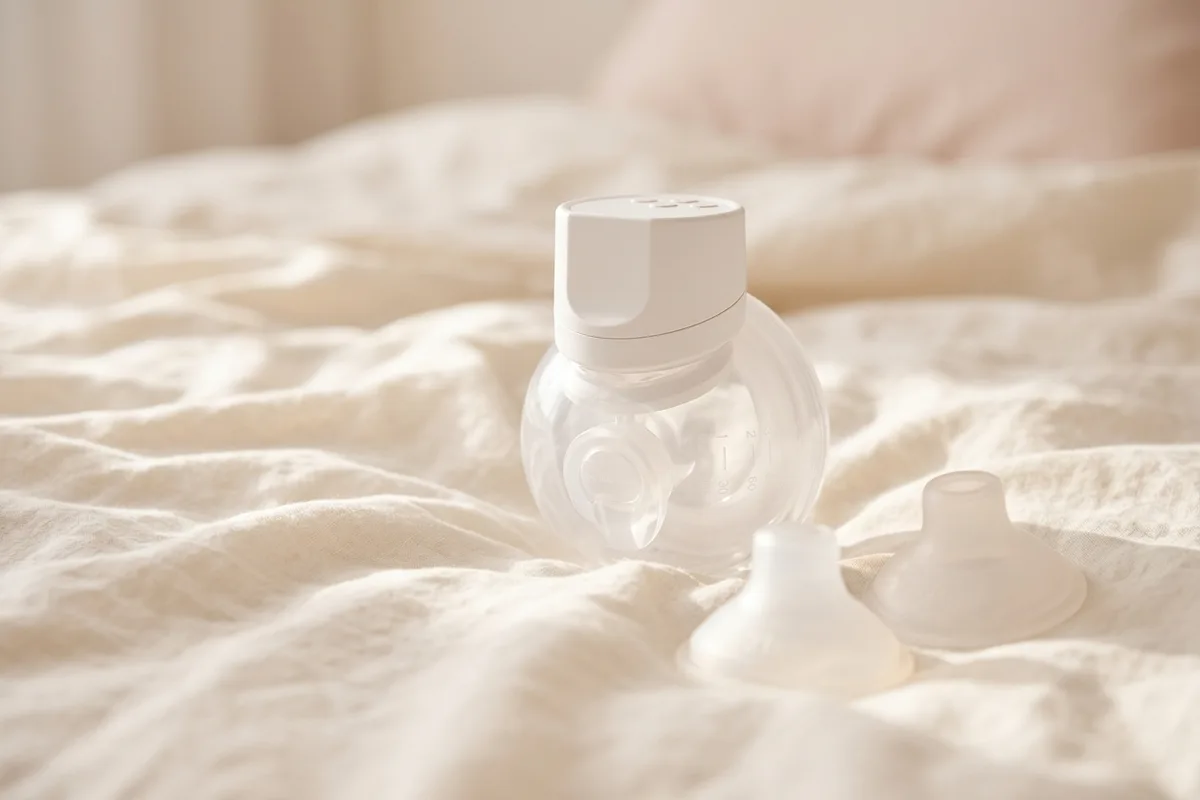
Check price at Saalt →Let me be clear up front, because the internet gets this wrong: Saalt does not make period swimwear. Its own catalog, customer-service desk, and blog all say so — its support team tells swimmers to use "a cup or disc instead, which are made to stay secure during water activities." So Saalt's real role on this page isn't a bottom; it's the internal half of the double-up — a Saalt Disc worn under any thin period bottom for medium-plus practice days.
The materials reason it works underwater is the whole point: a disc is 100% medical-grade silicone that collects fluid rather than absorbing it. Pool water can't saturate a sealed silicone cup the way it floods an absorbent gusset, so its capacity — Saalt rates the Regular disc at up to ~50 mL, roughly six tampons — holds while you're submerged. For the chemical-anxiety swimmer it's also the cleaner story: a Certified B Corp that publishes independent lab tests showing no detectable PFAS in its cups and discs down to parts-per-billion. It's $35, reusable over a claimed multi-year lifespan.
The honest cons matter for athletes. It's an internal product — not for anyone who wants a garment-only solution. And a disc can squat-leak or "auto-dump" when you bear down hard, which a wall push-off or hauling yourself out of the pool can absolutely do. So the double-up is a strong heavy-day stack, not a foolproof bunker. Empty it before a hard set, and don't assume disc-plus-bottom makes you invincible.
- Pros: collects rather than absorbs, so capacity holds underwater; zero added drag (it's internal); highest capacity here (~50 mL Regular); PFAS lab-tested, B Corp; reusable, ~$35 amortized over years.
- Cons: not a swimsuit — internal only, not for garment-only users; can squat-leak / auto-dump on a hard push-off or pool exit; insertion learning curve; higher up-front cost than tampons; no OEKO-TEX (not applicable to silicone, but worth noting).
4. Modibodi Swimwear Bikini Brief – Super — heaviest practice day only
Modibodi Swimwear Bikini Brief – Super
Most capacity, bulkiest gusset = highest drag. NOT the primary underswim pick — reserve for a heavy two-a-day when you're not racing the clock.
Check price at Modibodi →I'm including the Modibodi Bikini Brief – Super honestly, and ranking it last on purpose. It has the most capacity here — Modibodi markets it as "up to 10 tampons / 50 mls" — but that's exactly the problem for underswimming. Capacity comes from a thicker, higher-volume gusset, and thicker means the highest drag in this lineup. That's the opposite of what layering under a race suit is for. It's a fine swim brief; it's the wrong tool for chasing splits.
Two honesty notes. That "10 tampons / 50 ml" figure is a dry-lab equivalence, not an underwater-validated number — Modibodi publishes no in-water data, and (contrary to some search results) the US swim gusset is 100% polyester, not merino. And returns are the weak spot: opened or worn swim items are generally non-returnable, return shipping is buyer-paid, refunds are reported as slow or gift-card-only, with an AI-first support desk. Reserve this one for a heavy two-a-day where comfort beats speed — and on a serious heavy day, pair it with the disc and read the heavy-flow period swimwear guide.
- Pros: highest capacity here (brand-claimed up to ~10 tampons); chlorine-resistant recycled-nylon shell with a leak-proof polyurethane barrier; OEKO-TEX STANDARD 100 claimed on-page; no-intentional-PFAS posture.
- Cons: bulkiest gusset = highest drag — defeats the underswim goal; absorbency is a dry-lab marketing figure, not validated underwater; premium price ($76–$160 reg., discount-reliant); rigid, buyer-paid returns and AI-first CS; some durability complaints.
The underswim protocol: how to actually layer it
Here's the step-by-step, threaded with the honest caveats. None of this is medical advice — it's a materials-and-fit method.
- Start with a thin, low-rise bottom. Reach for the Knix or the The Period Company bottom — thin profile, low drag. Skip the bulky high-capacity brief for any session where you care about speed.
- Layer the regulation or tech suit snugly OVER it. This is the actual mechanism of underswimming. The suit's compression pins the bottom against your body, slows water flushing through the core, and stops the waistband rolling on a turn. A loose suit defeats the whole thing.
- For medium-plus days, double up with a low-volume disc. Insert a Saalt Disc (or similar) under the bottom, then layer as above. The disc carries the real capacity; the bottom is leak insurance. Honest warning: a disc can squat-leak or auto-dump when you bear down — so empty it before a hard push-off set, and again before you climb out.
- Use the "drag-suit" framing for practice, not racing. If a teammate or coach asks, layering reads like wearing a drag suit. Keep it to training — this isn't a sanctioned competition setup.
- Manage the exit. The pink puddle happens on the way out, when gravity wrings the water-loaded core. Wrap a towel before you sit, and don't squat on the pool deck right after getting out. It's diluted pool water, not a flood — but a towel saves the awkwardness.
Two friction points to plan around: a tech suit is genuinely hard to peel on and off for a bathroom break mid-practice, and flip-turn shear is real on a sloppy fit. This is a training solution that gives light-to-medium leak resistance. On a true heavy flow during a meet, an internal product still has the highest capacity — and that's a personal call.
Buying guide: gusset profile, compression, chlorine & fit for athletes
If you read one thing on a spec sheet, read the gusset. For underswimming you want the thinnest profile that still has a real waterproof backing (PUL, TPU, or PU film) — thin equals low drag and a clean disappearance under a suit. A synthetic polyester gusset dries faster but feels wetter; a merino or cotton gusset holds more but is bulkier — wrong for racing. There's no universally "best" fiber, just your priority: drag or capacity. On cut, a low-rise sits cleaner than a high-rise — and remember the lock is the layered suit, not a grippy elastic.
Chlorine and dry time are the enemy of any absorbent swim layer in two-a-day training. Rinse chlorine promptly, give a bottom a real 24–48 hours to dry, and rotate two so one is always ready. If a chlorine-fatigued suit starts to smell, that's biofilm — periodic stripping (a vinegar soak) breaks it down. Heat is hard on laminates too, so go easy on long hot-tub soaks. On sizing: a gusset that's too short front-to-back is where side-and-rear leaks start, and a tight race suit over a too-small bottom can pinch and shift — size for coverage, not compression.
Finally, chemical safety, honest in both directions. The verifiable mark is OEKO-TEX STANDARD 100, which lab-tests every component against 1,000+ harmful substances — chemical safety only, not performance or "eco." On PFAS: the widely cited Thinx case was a $5 million class-action settlement in 2023 in which Thinx denied wrongdoing and admitted none — a settlement, not a regulator's finding or a ban. That's a real reason for the chemical-anxiety camp to want certified-clean fabric, and a fair point for the compliance-fatigue camp that a settlement isn't proof of toxicity. Both can be true. Watch for vague "non-toxic certified" rebrands with no named certifier — OEKO-TEX is the claim you can check. Whether swimming on your period is safe at all is a clinical question for the CDC and ACOG, not a materials writer.
Frequently asked questions
It depends entirely on the gusset. A thin synthetic-gusset bottom like the Knix adds negligible drag, which is why this guide ranks the thinnest bottoms first. A bulky merino or super-absorbency gusset, or any gusset that's fully saturated with pool water, adds measurable hydrodynamic drag — so for race-pace sets, steer away from heavy-flow swim briefs and use a thin bottom plus a low-volume disc instead.
A loose waistband can roll on a hard push-off — that's the real shear-force complaint. The fix isn't a tighter bottom on its own; it's layering a snug regulation or tech suit over it so the suit's compression locks it in place. That "lock" is the whole point of underswimming. On a sloppy or oversized fit, there's no guarantee, so prioritize a clean, compressed layer.
Use the double-up protocol: a thin period bottom plus a low-volume menstrual disc, which collects fluid and holds its capacity underwater. Be honest about the caveat — a disc can squat-leak or auto-dump when you bear down on a push-off or climbing out, so empty it before hard sets. No swim layer alone is a heavy-flow bunker underwater; for true heavy flow, see the dedicated heavy-flow guide and consider an internal product.
A thin, discreet period bottom under a team suit is a real tampon-free option many tweens prefer, and the low profile can suit sensory-sensitive or neurodivergent swimmers who dislike internal products. For full guidance on teen one-pieces, sizing, and first-period kits, head to the period swimwear for teens guide. For any safety question, ask your pediatrician — that's a clinical call, not a materials one.
Rinse the chlorine out promptly, then give the bottom a full 24–48 hours to dry — fast back-to-back training is the real enemy of any absorbent swim layer. Rotate two bottoms so one is always dry. If a chlorine-fatigued suit develops a stubborn odor, that's biofilm; a periodic vinegar "strip" soak breaks it down. Avoid high heat and long hot-tub soaks, which degrade the waterproof laminate over time.
It depends on you. Underswimming wins for swimmers who can't tolerate or don't want internal products, and for light-to-medium days. A tampon or a menstrual disc still has higher capacity for a true heavy race day. There's no single right answer — it's a personal and, where health is concerned, a medical question. For whether swimming on your period is safe at all, defer to the CDC and ACOG, not to a materials writer.