

Affiliate disclosure: This post contains affiliate links, including links to Amazon. If you buy through them, I may earn a small commission — at no extra cost to you. I only recommend tools I'd point a friend to, and my editorial opinions and rankings are my own. Full disclosure here.
I spent years in a cosmetic R&D lab, and the one thing that lab work ruins for you is the word "effortless" on a hot styling tool. A hair waver is a heater you clamp onto your hair — so the whole question of which one is "best" is really two questions: does it make the wave you want, and does it do it without frying the hair you're waving? This guide ranks the best hair wavers of 2026 on both, and it does not assume the most expensive tool wins. For most people, it doesn't.
Key Takeaways
- Best for most people: the Wavytalk Power Wave — soft, high-volume S-waves, eight real temperature settings and heat-management tech, at a fraction of premium pricing. (Buy it on Amazon for easy returns — more on that below.)
- Barrel shape decides the look: dual-barrel deep wavers make loose, beachy S-waves; triple-barrel tools make tighter, more defined waves; a true crimper makes a sharp zig-zag. Pick the tool for the look, not the other way round.
- Temperature control matters more than the brand: the single biggest predictor of heat damage is the temperature you actually use. Adjustable heat and a heat protectant beat any "ionic" marketing claim.
- Cheapest isn't the same as best value: the rock-bottom wavers run hot with crude controls; the value sweet spot is a tool with real temperature steps that still costs well under the $120–$200 premium names.
How I evaluated these wavers
I didn't curl forty heads of hair in a lab, and I'm not going to pretend I did. What I did do is read each tool's real specs — barrel type and size, temperature range and steps, coatings, voltage and safety features — and weigh them against what actually protects hair from heat, then cross-check that against how editors and long-term owners report each one performs. I ranked on four things: (1) the wave quality the barrel design produces, (2) heat control (adjustable settings, sensible max temperature, ceramic/ionic tech), (3) safety and ease (auto shut-off, anti-scald tips, button layout, dual voltage), and (4) value — results per dollar.
One honest note on the order: this list is ranked by best for the most people at a sensible price, not by raw performance. The two premium tools (Amika, ghd) genuinely edge ahead on pure results — I say so in their entries — but they cost two to four times the value picks, which is why they don't lead. If money is no object, skip to ghd.
The best hair wavers at a glance
| Tool | Best for | Wave style | Heat control | Approx. price |
|---|---|---|---|---|
| Wavytalk Power Wave (best for most) | Soft beach waves, value | Dual-barrel, loose S-wave | 8 settings, 280–420°F | Check on Amazon |
| Bed Head Wave Artist | Tight budgets | Deep barrel, beachy | Dial, up to ~400°F | ~$25–35 |
| Hot Tools 24K 3-Barrel | Defined, uniform waves | Triple-barrel | Digital, heat-lock | ~$54 |
| Amika High Tide | Fine / color-treated hair | Triple-barrel, tight | Low temps + auto shut-off | ~$120 |
| ghd Wave | A splurge / most natural | Triple-barrel, oval | Single optimal temp | ~$199 |
Prices are approximate street prices at publication and move around constantly — always check the live listing. I've left a hard price off the Amazon pick on purpose, because Amazon's price changes daily; tap through for the current number.
1. Wavytalk Power Wave — best for most people
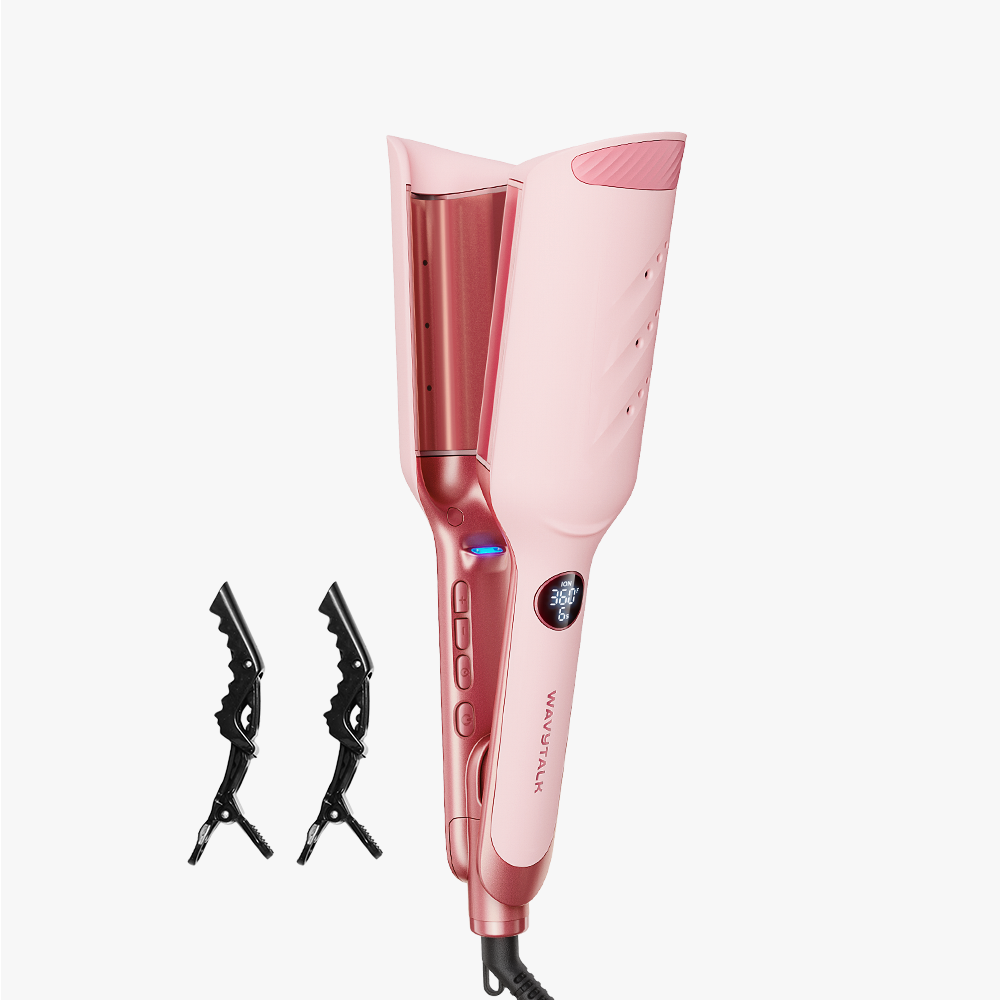
Wavytalk Power Wave
Soft, high-volume beach waves, eight real temperature settings and heat-management tech — at a fraction of the premium tools. The sweet-spot pick for most hair.
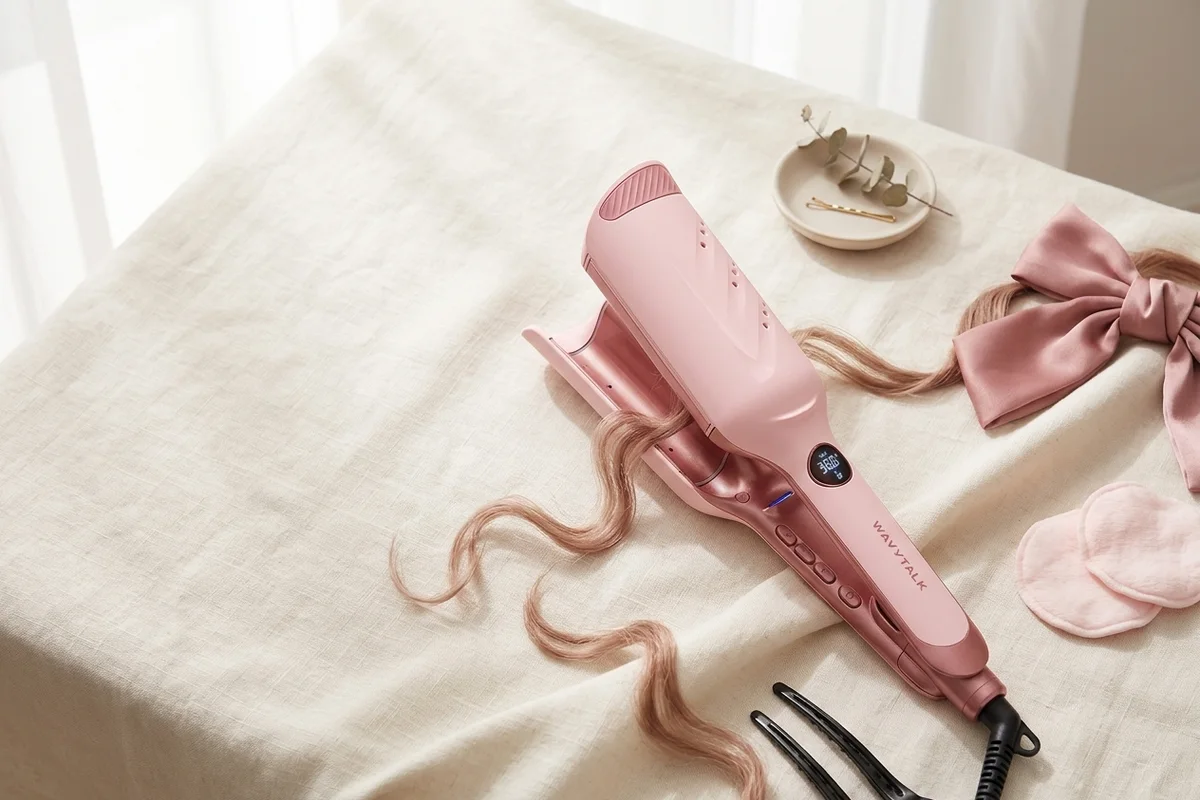
Check price on Amazon →If you want one waver and you don't want to overthink it, this is the one I'd point a friend to. The Power Wave is a dual-barrel deep waver — its two long 90mm deep-V barrels press a soft, large S-wave into the hair rather than the tight zig-zag a crimper makes. That's the "I woke up at the beach" look most people actually want, and the wide barrel makes it fast on medium-to-long hair.
What sets it apart from the cheaper wavers is the control. You get eight real temperature steps from 280°F to 420°F — so fine or color-treated hair can stay low (around 280–320°F) while coarse, stubborn hair gets the heat it needs — plus ionic channels to cut frizz, a ventilated design that disperses heat, an anti-scald shield on the tips, and dual voltage for travel. None of that is magic, but precise temperature steps are exactly the lever that protects your hair, and most sub-$60 tools just give you "low/high."
I'm ranking it first on value, and I want to be honest about the trade-offs, because they're real. There's no auto shut-off, so you have to remember to unplug it. The button layout sits where your hand goes, so it's easy to nudge the temperature mid-style until you learn the grip. And a full head of polished waves takes patience on thick hair — this is a styling tool, not a thirty-second miracle.
One buying note that matters. The Power Wave itself reviews well — owners consistently call it fast, easy and gentle on hair. The recurring complaint in the low-star reviews isn't the tool; it's the brand's direct customer service, shipping and returns. So buy it on Amazon, not the brand's own site: you get Amazon's return window and support if you ever need them, which takes the one real risk off the table.
- Pros: soft, high-volume S-waves; eight precise temperature settings; ionic + ventilated + anti-scald; dual voltage; strong value.
- Cons: no auto shut-off; buttons easy to bump until you learn the grip; a full style takes patience on thick hair.
2. Bed Head Wave Artist — best on a tight budget
Bed Head Wave Artist Deep Waver
The cult-classic budget deep waver. Cheap, simple and genuinely good at beachy waves — the trade-off is coarse heat control and it runs hot.
Check price at Bed Head →The Bed Head Wave Artist is the tool that made the deep-waver look go mainstream, and it's still the budget benchmark — tens of thousands of owners and a price that regularly dips under $30. It uses tourmaline-ceramic plates, runs on dual voltage, and makes a satisfyingly deep beach wave straight out of the box. If your budget is the deciding factor, buy this and don't feel bad about it.
The honest catch is heat. The Wave Artist leans hot and its control is a basic dial rather than precise steps, so it's easy to over-cook fine or color-treated hair if you're not careful. It's also on the heavy side for a long styling session. For a healthy head of medium-to-thick hair on a budget, it's a steal; for fragile hair, I'd spend up for real temperature control.
- Pros: lowest price here; proven, beloved design; tourmaline-ceramic; dual voltage.
- Cons: runs hot with coarse dial control; heavier in the hand; not ideal for fine or fragile hair.
3. Hot Tools Pro Artist 24K Gold 3-Barrel — best for defined waves
Hot Tools Pro Artist 24K Gold 3-Barrel Waver
A reliable triple-barrel that makes a crisper, more uniform S-wave, with a digital display and a heat-lock so you can't bump the temperature. Just no safety stand.
Check price at Hot Tools →If you want a tighter, more defined wave — think old-Hollywood ripples rather than loose surf — a triple-barrel is the right shape, and the Hot Tools 24K Gold is the value champion of that category. The three barrels press a consistent, repeating S into each section, and the 24K-gold panels heat fast and evenly. The detail I like most is the heat-lock: it stops you from accidentally changing the temperature mid-style, which is the exact flaw that frustrates owners of cheaper triple-barrels.
The miss is a small but real one: there's no safety stand, so you're setting a very hot triple barrel down on your counter. Mind your surfaces and your fingers.
- Pros: crisp, uniform waves; fast even heat; digital display with a genuinely useful heat-lock; fair price.
- Cons: no safety stand for the hot barrels; defined waves aren't the soft beachy look some people want.
4. Amika High Tide — best for fine or color-treated hair
Amika High Tide Deep Waver
Built around restraint: low temperature settings and auto shut-off make it the safest pick for fine, bleached or fragile hair. You pay premium money for that gentleness.
Check price at Amika →Amika's High Tide is the one I'd steer fragile-hair clients toward, because it's the rare tool designed around not overheating your hair. Its temperature ceiling is lower than most rivals (around 390°F at the top), and it has a genuine auto shut-off — both meaningful if your hair is fine, highlighted or chemically treated and you want to keep what length you have. The tighter barrels still make a pretty, textured wave.
The trade-offs are price and power. At roughly $120 it costs three to four times the budget picks, and that same lower max temperature means very coarse or thick hair may find it slow to set a wave. For fine and color-treated hair, that restraint is the point; for thick hair on a budget, it's the wrong tool.
- Pros: low temperature ceiling + auto shut-off; gentlest option for fragile hair; quality build.
- Cons: premium price; the same low max temperature is underpowered for very thick or coarse hair.
5. ghd Wave — best splurge (most natural texture)
ghd Wave Triple Barrel
The best pure result on this list: oval-shaped barrels make an unusually natural, un-crimped wave. The only thing wrong with it is the price.
Check price at ghd →If you just want the best-looking wave and the budget conversation is over, the ghd Wave is it. The trick is the oval barrels — instead of perfectly round rods that can read as a uniform crimp, the oval shape leaves a softer, more organic ripple that looks like a wave you were born with. ghd's single-optimal-temperature philosophy (one well-chosen heat rather than a dial to fuss over) keeps it consistent.
There's no clever criticism to make here except the obvious one: at around $199 it's three to four times the price of tools that get you 85% of the way there. It earns the splurge if waves are your everyday signature; it's overkill if you wave your hair twice a month.
- Pros: most natural, least "crimped" texture of any pick; consistent single-temp performance; premium build.
- Cons: expensive; single fixed temperature gives you less control than the adjustable tools.
How to choose a hair waver (the heat-science version)
Strip away the marketing and choosing a waver comes down to two decisions: the wave you want, and how much heat your hair can take.
Match the barrel to the look. A dual-barrel deep waver (like the Wavytalk and Bed Head) makes a loose, large, beachy S-wave and is the fastest on long hair. A triple-barrel (Hot Tools, Amika, ghd) makes a tighter, more defined and uniform wave. A true crimper makes a sharp zig-zag for volume and texture, not soft waves. None is "better" — they make different things, so buy for the result you actually want.
Temperature control is the whole ballgame for hair health. Heat is what damages hair: laboratory work on the hair shaft shows that higher styling temperatures progressively degrade the hair's surface and protein structure, and the effect scales with how hot you go and how often. That's why an adjustable tool beats a fixed one: you can use the lowest temperature that still sets a wave. As a rough guide, fine, bleached or color-treated hair is happiest around 280–320°F, normal hair around 330–370°F, and only coarse, resistant hair needs to climb toward 400°F+. The American Academy of Dermatology's guidance on heat styling is blunt about the rest: use the lowest effective heat, don't style every day, and always use a heat protectant.
Coatings and ions help at the margins. Ceramic and tourmaline plates heat more evenly (fewer scorching hot spots), and ionic technology helps lay the cuticle flat to cut frizz and static. They're real, but secondary — a ceramic tool used too hot still damages hair, and a "negative-ion" claim won't save you from 420°F on fragile strands. Treat them as tie-breakers, not the deciding factor.
Don't skip the safety and travel details. Auto shut-off is genuinely worth having (a few picks here, including the value Wavytalk, leave it out — so build "unplug it" into your routine). Anti-scald tips spare your fingertips, and dual voltage (100–240V) means the tool works abroad without frying itself on a 230V outlet.
Frequently asked questions
Start on dry, brushed hair and mist on a heat protectant. Let the waver heat fully, then clamp it near the roots of a one-to-two-inch section, hold for a few seconds, release, and move straight down the same section — lining the next clamp up with the wave you just made so the S-pattern stays continuous. Work in sections, let everything cool before you touch it, then break the waves up with your fingers for a softer, beachier finish.
A waver makes a smooth, rounded S-shape — the soft beach wave — using deep or oval barrels. A crimper makes a sharp, geometric zig-zag for volume and texture. They look related in the box but produce very different results, so make sure a tool labeled "crimper" actually creates the rounded wave you want before you buy. Dual-barrel deep wavers give the loosest waves; triple-barrel tools give tighter, more defined ones.
Any hot tool can, because heat itself is what stresses the hair shaft — and the damage scales with temperature and frequency. The way to minimize it is entirely in your control: use a heat protectant every time, choose the lowest temperature that still sets a wave (often well under 350°F for fine or color-treated hair), don't go over the same section repeatedly, and give your hair heat-free days. A tool with adjustable temperature settings makes this far easier than a one-heat tool.
On most hair, waves set with a waver hold for one to three days, and often longer than waves from a curling iron because the pressed S-shape is more structural than a wrapped curl. Clean, dry hair holds best — freshly washed, slightly "second-day" hair has the right grip. A light flexible-hold hairspray or texture spray after styling, and a loose pineapple or silk pillowcase overnight, will stretch them another day.
Neither is better outright — they make different waves. Dual-barrel deep wavers create a looser, larger, more natural beach wave and tend to be faster on long hair, which is why they're the most popular choice. Triple-barrel wavers create a tighter, more defined and uniform S-wave that reads as more "styled." If you want effortless surf texture, go dual; if you want crisp, even ripples, go triple.
Yes. A standard electric hair waver is allowed in both carry-on and checked bags by the TSA — there's no gas or butane to worry about as there is with some cordless stylers. For international trips, check that the tool is dual voltage (100–240V); plugging a single-voltage 120V tool into a 230V outlet abroad, even with a plug adapter, can destroy it. Most of the wavers here, including the Wavytalk, are dual voltage.
Want the soft, low-effort version of this look? The Wavytalk Power Wave is the pick I'd hand most people — and you can browse the rest of my hair-tool reviews as the cluster grows.