

Affiliate disclosure: This post contains affiliate links, including links to Amazon. If you buy through them, I may earn a small commission — at no extra cost to you. I only recommend tools I'd point a friend to, and my editorial opinions and rankings are my own. Full disclosure here.
Here's the thing most "steam straightener" marketing won't tell you: steam doesn't straighten your hair — heat does. The steam is there to add moisture so the heat does less damage on the way. That's a genuinely useful idea, especially for thick, frizzy or curly hair, but it only works if the tool gets the fundamentals right: real temperature control, plates (or a comb) that suit your texture, and enough steam to matter. This guide ranks the best steam straighteners of 2026 on exactly those fundamentals — and, as usual, the most expensive one isn't automatically the winner.
Key Takeaways
- Best for most people: the Wavytalk Steam Sesh — nano-titanium plates (not bristles), five real temperature settings, steam and auto shut-off, at a fraction of premium pricing. (Buy it on Amazon — more on why below.)
- Steam is for moisture, not magic: it opens the cuticle and adds hydration so you can smooth coarse or frizzy hair at a lower effective heat. It is not damage-free — any hot tool stresses hair.
- Plates vs. comb decides your texture fit: flat-iron plates straighten faster and handle thick, long hair; comb-style steamers are gentler and better for curly and coily textures but slow on thick sections.
- Never use one on wet hair: steam straighteners run on a small water tank and go on dry hair. Clamping a hot tool onto soaking hair is how you get real heat damage.
How I evaluated these
I didn't straighten forty heads of hair in a lab, and I won't pretend I did. What I did do is read each tool's real specs — plate or comb design, plate material, temperature control, steam mechanism, safety features and voltage — and weigh them against what actually protects hair from heat, then cross-check that against how editors and long-term owners report each one performs. I ranked on four things: (1) how well it smooths your texture without excess heat, (2) heat control (adjustable settings, sensible plate material), (3) steam delivery and ease (tank, refilling, comb fit, auto shut-off), and (4) value.
One honest note on the order: this list is ranked by best for the most people at a sensible price, not by raw price. The premium L'ange genuinely edges ahead on pure polish — I say so in its entry — but it costs roughly double the value pick, which is why it doesn't lead.
The best steam straighteners at a glance
| Tool | Best for | Type | Heat control | Approx. price |
|---|---|---|---|---|
| Wavytalk Steam Sesh (best for most) | Value, thick/frizzy hair | Nano-titanium plates | 5 settings, 300–450°F | Check on Amazon |
| L'ange Le Vapour | A premium finish | Infrared + steam plates | Adjustable | ~$100+ |
| Conair Hydrofusion | Hands-off refilling | Plates + base station | Adjustable | ~$60 |
| L'ange SteamSmooth | Curly / coily hair | Steam comb | Adjustable | ~$70 |
Prices are approximate street prices at publication and move around constantly — always check the live listing. I've left a hard price off the Amazon pick on purpose, because Amazon's price changes daily; tap through for the current number.
1. Wavytalk Steam Sesh — best for most people
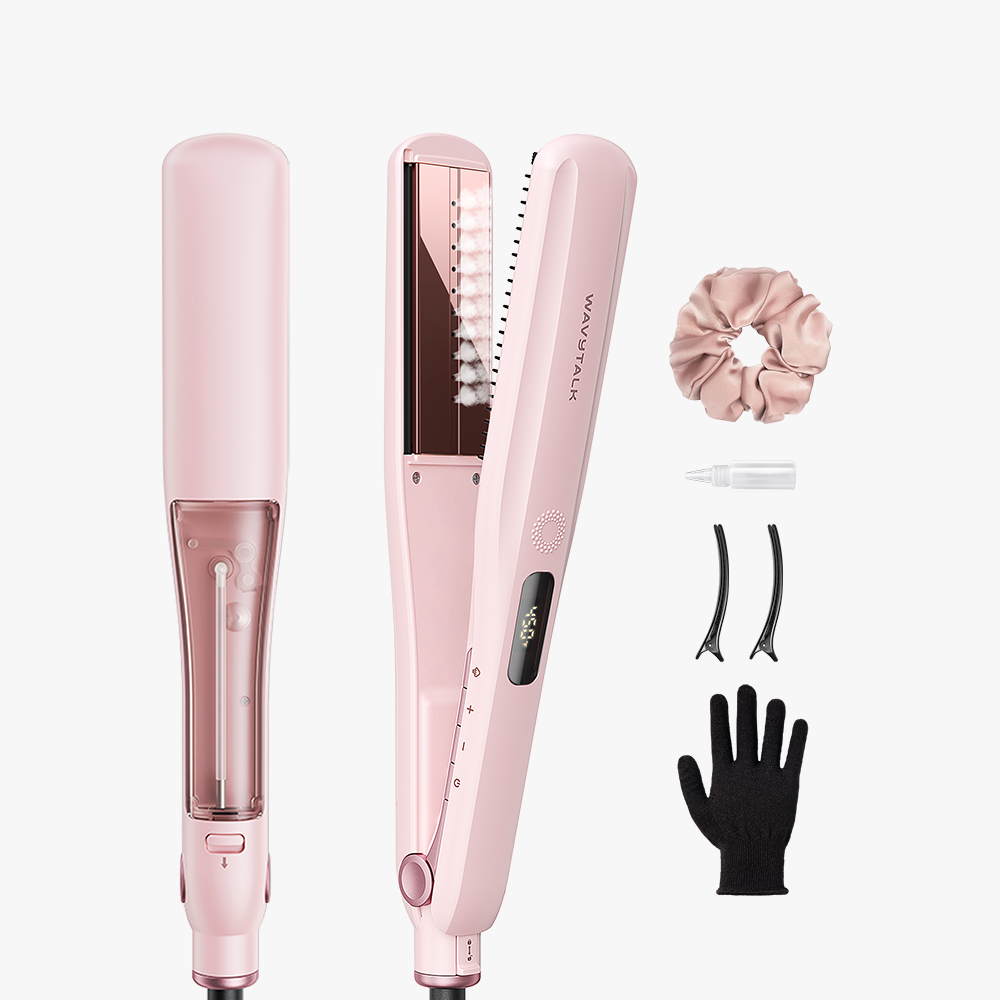
Wavytalk Steam Sesh
Plate-style steam straightening with five real temperature settings and a detachable comb — handles thick, frizzy hair without overpaying. The sweet-spot pick for most textures.
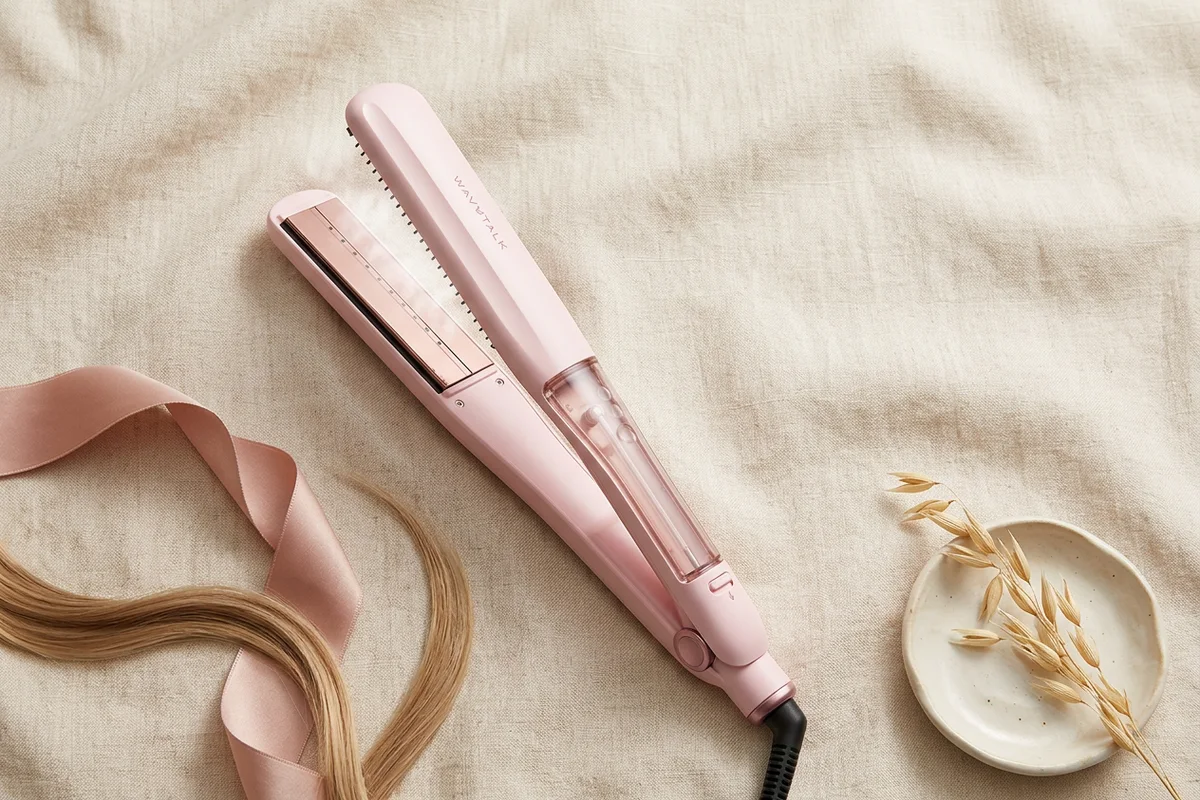
Check price on Amazon →If you want one steam straightener and you don't want to overthink it, this is the one I'd hand a friend. The Steam Sesh gets the two fundamentals right that cheap steam tools usually miss. First, it uses nano-titanium plates, not a bristle comb — so it actually straightens thick and long hair in sensible passes instead of snagging through it. Second, it has five real temperature settings (300–450°F), which is the single most important thing for protecting your hair: fine or color-treated hair can stay at 300–340°F while coarse, stubborn hair gets the heat it needs.
The steam itself comes from a small Hydro-Infusion tank that adds moisture as you pass, which is exactly what helps frizzy or coarse hair smooth out at a lower effective heat. It also includes a detachable comb for a softer silk-press finish when you want it, a 30-minute auto shut-off, and dual voltage for travel.
I'm ranking it first on value, and I'll be honest about the trade-offs. The water tank is small (about 12 mL), so on long, thick hair you'll refill it mid-style. Steam straighteners in general have a small learning curve versus a plain flat iron — you're managing water, steam and a comb attachment. And the plates run hot at the top of the range, so use the lowest setting that actually works on your texture.
One buying note that matters. The Steam Sesh itself reviews well — owners consistently say it straightens fast and leaves hair soft. The recurring complaint in the low-star reviews isn't the tool; it's the brand's direct customer service, shipping and returns. So buy it on Amazon, not the brand's own site: you get Amazon's return window and support if you ever need them, which takes the one real risk off the table.
- Pros: nano-titanium plates handle thick hair; five real temperature settings; steam + detachable comb; 30-minute auto shut-off; dual voltage; strong value.
- Cons: small water tank means frequent refills on long hair; steam tools have a learning curve; comb must be attached for the silk-press mode.
2. L'ange Le Vapour — best premium finish
L'ange Le Vapour Infrared Steam Flat Iron
Infrared heat plus steam from a recognized brand — the most polished result here. You pay a premium over the value tools for that last 10%.
Check price at L'ange →If budget isn't the deciding factor, L'ange's Le Vapour is the steam straightener I'd point you to. It pairs infrared heat with steam, a combination the brand argues penetrates the strand more gently than surface heat alone, and the build and finish are a clear step up from budget tools. It's the established, widely reviewed premium pick, and it shows in the polish of the result.
The honest catch is simply price: L'ange tools sit around the $100+ mark (often discounted, so watch for sales). For a lot of people the value pick above does 90% of this for half the money — but if you straighten often and want the nicest finish, the Le Vapour earns it.
- Pros: infrared-plus-steam for a polished finish; recognized, well-supported brand; premium build; dual voltage.
- Cons: premium price; like all steam straighteners, a small tank and a learning curve.
3. Conair Hydrofusion — best for hands-off refilling
InfinitiPRO by Conair Hydrofusion Steam Straightener
A base-station water reservoir auto-refills the steam chamber in seconds, so you skip the constant manual top-ups. Mainstream, affordable and easy to find.
Check price at Conair →The most annoying thing about steam straighteners is the constant refilling, and Conair's Hydrofusion is the pick that solves it: a base-station water reservoir that tops the chamber back up in seconds, plus ionic styling to cut frizz. It's the convenience choice — a widely available, fairly priced mainstream option you can grab at any drugstore-tier retailer.
It won't feel as premium as the L'ange and it's tied to its base station, but for a busy morning routine the auto-refill is a genuinely nice quality-of-life feature.
- Pros: auto-refilling base station; ionic styling; affordable and easy to find; trusted mass brand.
- Cons: base-station design is less travel-friendly; finish is a notch below the premium picks.
4. L'ange SteamSmooth — best for curly & coily hair
L'ange SteamSmooth Comb
A comb-style steam straightener that glides through texture and adds moisture with less tension than plates — built for curly and coily hair.
Check price at L'ange →If your hair is curly or coily, a comb-style steamer can suit you better than plates. The teeth glide through the curl pattern and the steam adds moisture as you go, which lets you smooth textured hair with less of the tension and repeated passing that clamping plates can require. L'ange's SteamSmooth is the cleanest version of this I'd recommend.
Be realistic about the trade-off the comb design carries for everyone: it's slower on very thick or long sections than a plate iron, so if you have a lot of straight-ish hair to get through quickly, the plate picks above are faster. For coils and curls, though, the gentler comb path is the point.
- Pros: gentle comb glide for curly/coily texture; steam adds moisture; less plate tension on fragile coils.
- Cons: slow on thick or long sections; less effective for a glassy, poker-straight finish than plates.
How to choose a steam straightener (the science version)
Strip away the marketing and a steam straightener is a flat iron with a water tank. Here's what actually matters.
Understand what the steam does. Steam adds moisture and helps lift the cuticle so coarse, dry or frizzy hair smooths at a lower effective temperature than it would dry — and dryness is a big driver of frizz, so the moisture genuinely helps the result look shinier. It is not damage-free, though. Heat is still what stresses the hair shaft: laboratory work shows that higher styling temperatures progressively degrade the hair's surface and protein structure, and the effect scales with how hot and how often you go. Steam helps you use less heat; it doesn't make heat free.
Match the design to your texture. Flat-iron plates (like the Wavytalk and L'ange Le Vapour) straighten faster and handle thick, long and straight-ish hair better. A comb (like the SteamSmooth) is gentler and better for curly and coily textures, but slower on thick sections. Buy for the hair you actually have.
Insist on temperature control. This is the lever that protects your hair, and it's the thing the cheapest steam tools cut. Use the lowest setting that still smooths your texture — roughly 300–340°F for fine, bleached or color-treated hair, up toward 400°F+ only for coarse, resistant hair. Nano-titanium plates heat evenly at the high end (good for thick hair); ceramic and tourmaline run a touch gentler. And the American Academy of Dermatology's guidance on heat styling still applies: lowest effective heat, not every day, always a heat protectant.
Mind the water and the safety details. Always use a steam straightener on dry hair — the tank supplies the moisture, your hair should not be wet. Tank size affects how often you refill (small tanks mean more top-ups on long hair). Auto shut-off is worth having, and dual voltage (100–240V) lets the tool travel without frying itself on a 230V outlet.
Frequently asked questions
It depends on your hair. A steam straightener adds moisture as it works, which helps coarse, frizzy or curly hair smooth out at a lower effective heat and look shinier — a real benefit if dryness and frizz are your issues. A regular dry flat iron is simpler and faster (no water tank to fill) and is perfectly good for hair that's already healthy and not especially frizzy. Neither is "better" outright; steam is the edge for thick, dry or textured hair.
Less than dry ironing at the same temperature, because the moisture lets you smooth at a lower effective heat — but it is not damage-free. Heat itself is what stresses the hair shaft, and that scales with temperature and frequency. Minimize it the same way you would with any hot tool: use a heat protectant, choose the lowest setting that still works (often under 350°F for fine or color-treated hair), don't re-pass the same section repeatedly, and take heat-free days.
No. Steam straighteners go on clean, fully dry hair — the small water tank is what supplies the steam, not the water in your hair. Clamping any hot tool onto wet or even damp hair can boil the water inside the strand and cause real damage. Blow-dry or air-dry first, brush, apply a heat protectant, then style.
Yes — the added moisture suits coarse, thick and curly textures that tend to be drier and frizzier. The nuance is the design: plate-style steam straighteners straighten thick or long hair faster, while comb-style steamers are gentler and glide through curly and coily textures with less tension. Pick plates for speed on thick hair, a comb for fragile coils.
Fill the water tank, let the tool heat to a setting that suits your texture (lower for fine hair), and work on dry, brushed, heat-protected hair in small sections. Attach the comb if the model includes one for a softer finish. Take slow, single passes rather than repeatedly ironing the same piece, and let each section cool before you brush it out.
Yes. A standard electric steam straightener is allowed in carry-on and checked bags by the TSA — just empty the water tank before you fly so it doesn't leak, and let the tool cool fully first. For international trips, check that it's dual voltage (100–240V); plugging a single-voltage 120V tool into a 230V outlet abroad, even with an adapter, can destroy it.
Want the low-fuss version of a salon silk press? The Wavytalk Steam Sesh is the pick I'd hand most people — and you can browse the rest of my hair-tool reviews as the cluster grows.